
German Nuclear Phaseout
The German nuclear phaseout was never just a technical decision about reactors, grids, and emissions curves. It was a national production with a long rehearsal period: safety fears in one wing, coalition bargaining in the other, and a public mood that kept rewriting the script. Look, we all know energy policy is supposed to be about engineering. In practice, it’s often closer to urban planning in a storm: everyone agrees the structure matters, but they’re also arguing over symbolism, neighborhood identity, and who gets blamed if the roof leaks.
Germany’s case is especially revealing because the shutdown of nuclear plants became a moral and political habit, not merely a utility choice. By the end, energy policy Germany style was less about one switch being flipped than about a whole system of incentives, memories, and performances settling into place.
The long goodbye: how a policy became a national habit
Germany didn’t wake up one morning and abruptly decide nuclear power was over. The exit took shape over years, through party competition, public pressure, and negotiated timelines that made the policy feel orderly, even inevitable. That’s the trick with big political commitments: once they become part of national identity, they stop behaving like ordinary policy and start acting like zoning law for the national conscience.
The anti-nuclear sentiment had deep roots, helped along by movements that framed reactors as more than infrastructure. They became symbols of a model of progress many people no longer trusted. You can see that history in the anti-nuclear movement in Germany. And once a managed exit is sold as the responsible, civilized path, reversing course starts to look less like pragmatism and more like apostasy.
Fear, memory, and the anti-nuclear reflex
The emotional architecture matters here. Chernobyl left a mark across Europe, and Fukushima gave those fears a fresh, vivid shape. Germany’s reaction wasn’t some irrational national tantrum. It was democratic memory doing what democratic memory does: taking distant catastrophe and turning it into domestic urgency.
The funny thing is, modern states love to talk in the language of risk management, but voters often hear risk as narrative. A reactor accident abroad doesn’t arrive as a spreadsheet; it arrives as a moral warning. After Fukushima, the political center moved fast because it understood something cold analysts often miss: in a democracy, public fear isn’t an externality. It’s part of the operating environment.
So nuclear power politics in Germany became less about whether its own plants were currently functioning safely and more about whether the country wanted to keep living with the premise at all.
The energy transition’s inconvenient math
This is where the elegant vision met the unhelpful arithmetic. Germany wanted to leave nuclear behind while expanding renewables and cutting emissions. Admirable ambition. Also a difficult balancing act when the sun and wind don’t work office hours.
The broader energy transition in Germany was meant to replace one system with a cleaner, more distributed one. But reliable low-carbon electricity is not secured by good intentions and applause lines. When nuclear exits before storage, transmission, and backup capacity are fully ready, somebody else fills the gap. Often that means fossil fuels hang around longer than anyone wants to admit.
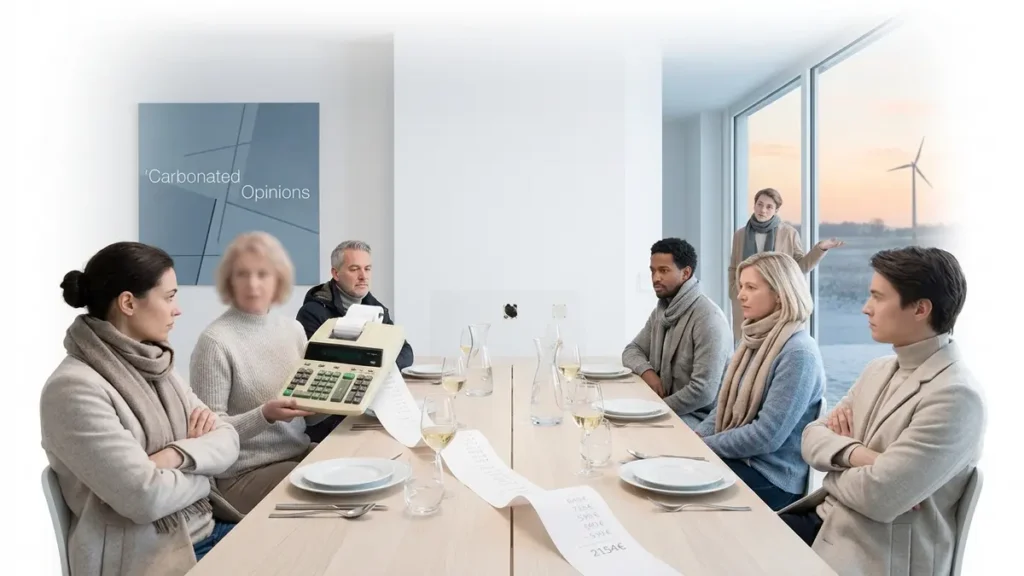
It’s a bit like a dinner party where everyone agrees the stove is dangerous, then acts shocked when the room gets cold. Idealism was real. So was the math.
Here’s the part that annoys both sides of the argument equally: according to Fraunhofer ISE, in the year after the last reactors switched off, coal-fired power in Germany actually hit its lowest level in 60 years, dropping by roughly a third, while renewables picked up more than enough slack to cover the gap — 270 TWh of clean generation versus the 30 TWh nuclear used to provide. Turns out the dinner party got the stove replaced faster than the doom-scrollers expected. The country’s entire coal-fired power production fell by almost one third, and non-renewable generation fell 26 percent in the first year without nuclear power, with additional renewable output more than compensating for the loss of nuclear capacity.
Politics in hard hats: coalitions, compromise, and public performance
German energy policy wasn’t just built in laboratories or utility boardrooms. It was assembled through coalition governments, party signaling, regional interests, and the constant need to appear both principled and competent. In that sense, the nuclear exit was a construction project where every contractor insisted they were merely following the blueprint, despite all of them revising it on-site.
Leaders had incentives to look decisive, especially after crisis moments. Supporting the shutdown signaled moral clarity, responsiveness, and historical seriousness. Opposing it meant risking the role of person standing in front of the excavator insisting the old structure still had potential.
That’s why this was never only about megawatts. It was about national self-image: who Germany believed itself to be after the 20th century, after environmentalism became mainstream, and after caution itself became a kind of political virtue.
What the shutdown really tells us
Germany’s nuclear shutdown was less a single verdict than a layered compromise between fear, identity, electoral arithmetic, and system design. It was risk management wrapped in moral language, with a few awkward engineering consequences stuffed in the back pocket.
That’s the enduring lesson. Energy policy is rarely just engineering with better branding. It’s city planning for a nation’s anxieties, values, and ambitions. If you enjoyed this walk through Europe’s most consequential case of “we’ll handle the consequences later,” share it with someone who thinks policy is ever only about policy.