
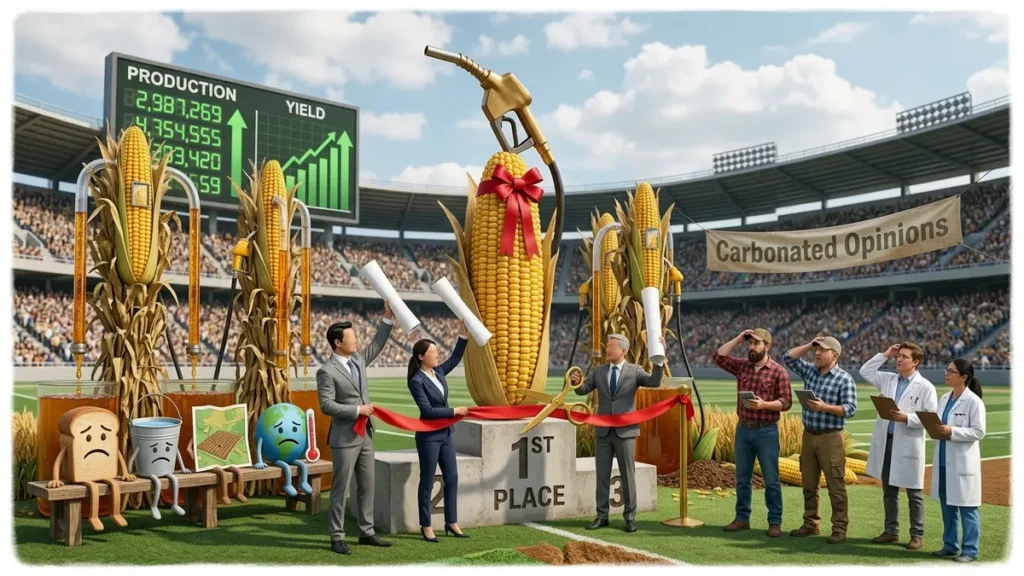
Environmental Subsidies: When Good Intentions Discover the Plot Twist
Environmental subsidies arrive with a heroic trailer: cleaner technology, better jobs, less pollution, fewer imported fuels. Everyone gets to stand beside a promising prototype and call it leadership. But incentives don’t applaud intentions; they reward whatever the rulebook pays for. The result can be a policy that delivers exactly what it ordered—more production, more investment, more ribbon-cuttings—while the public purpose sits in the cheap seats wondering when its name will be called.
The Grand Entrance: A Subsidy Promises to Save the Day
Governments use subsidies for sensible reasons. New technologies can be expensive before scale lowers costs. Private investors may avoid long-term risks. A public nudge can help build factories, support rural incomes, cut emissions, and reduce vulnerability to foreign fuel shocks.
That’s the campaign version, anyway. The less glamorous sequel involves transmission lines, fuel standards, land-use rules, emissions accounting, inspections, and someone willing to cancel a program when the evidence turns sour. Announcing money is easy. Measuring whether it bought the advertised outcome is where the stadium suddenly gets very quiet.
The Cornfield Coup: When Fuel Started Competing With Dinner
The U.S. corn-ethanol subsidy and federal blending mandate offered a politically irresistible play: support farmers, make fuel at home, and sell a greener drive. Ethanol fuel in the United States expanded dramatically. On the narrow question of whether a policy can create an ethanol industry, this was not subtle.
But corn has other commitments. It feeds people and livestock, anchors farm economies, and occupies land that cannot simultaneously become a climate policy mood board. Directing more of it into fuel put pressure on food and feed markets and sharpened arguments over farmland, water, fertilizer, and whether the tailpipe story was hiding a messier prequel.
Act Two: The Market Reads the Fine Print
Markets are not moral philosophers. They don’t read the speech; they read the incentive. If gallons earn support, gallons appear. If blending is required, blenders comply. The scoreboard fills with production numbers, investment announcements, and politicians claiming an assist.
The trouble is that a full ethanol tank is not automatically a climate victory. A green energy policy can stimulate activity while overinvesting in a technology whose real-world benefits are narrower than the original pitch. Prices shift. Supply chains strain. Land becomes more valuable for the subsidized crop. And emissions reductions, supposedly the star player, can spend the season warming up on the bench.
The Unintended Consequences Enter Wearing a Name Tag
This is the larger lesson from corn ethanol: environmental incentives can generate the activity they seek yet still miss the public interest they were meant to serve. The side effects weren’t obscure footnotes; they landed in food markets, farm decisions, and the carbon ledger.
A five-year study of the Renewable Fuel Standard found that expanding U.S. corn cultivation by 8.7 percent between 2008 and 2016 drove fertilizer use up 3 to 8 percent and water pollutants up 3 to 5 percent, while associated land-use changes produced greenhouse-gas emissions equivalent to gasoline’s—and likely at least 24 percent higher—undercutting the broader climate goals of the corn-ethanol program.
None of this means every subsidy is foolish. It means each one creates winners, losers, and a press release explaining why a “temporary” intervention now requires stability indefinitely.
The Hearing: Who Gets Blamed When the Applause Stops?
Once the applause fades, the cast knows its lines. Supporters ask for patience, or preferably expansion. Opponents call it a boondoggle. Beneficiaries describe support as indispensable. Taxpayers learn that “market correction” has a remarkably reliable way of arriving as a bill.
The fix isn’t performative austerity; it’s disciplined policy. Build in sunset clauses. Keep support competitively neutral where possible. Publish transparent accounting. Measure emissions outcomes, not merely gallons produced. Reassess programs regularly, including the inconvenient possibility that the best version of a subsidy has an ending.
Environmental subsidies become dangerous when governments count output, investment, and political credit while ignoring displaced costs and avoided emissions. Which subsidy deserves a second act—and which should leave the stadium before it demands an encore?