
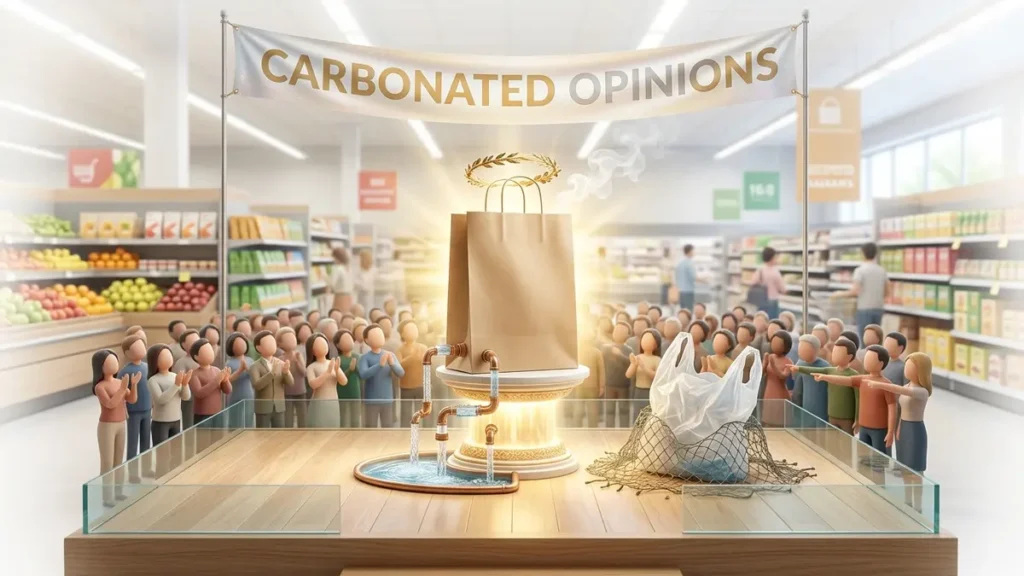
Environmental Myths: Paper Bags and Plastic Guilt
One of the stickiest environmental myths is that a paper bag is automatically greener than a plastic bag. It sounds right, which is usually how these things get promoted from hunch to moral doctrine. Paper feels wholesome. Plastic feels like a villain with a glossy finish. But “feels cleaner” and “has lower impact” are not the same sentence, and treating them as if they are is how climate misinformation keeps getting dressed up as common sense. Environmental myths thrive when a neat story can outrun the math.
Why “paper” sounds cleaner than it is
Paper has excellent public relations. It comes from trees, it looks plain, and it doesn’t carry the same visual baggage as plastic drifting through a storm drain. So our brains do what they often do: they mistake familiar for better.
The catch is that paper has its own environmental costs. Making it can require significant water and energy, plus raw material that has to be grown, harvested, processed, and transported. It also tends to weigh more than plastic, which means moving the same number of bags can involve more fuel and emissions.
In other words, the myth survives because people are judging a book by its recycled cover. “Paper” names the material. It does not finish the environmental math.
The part people usually leave out: reuse and disposal
This is the missing test hiding in plain sight: what happens after the checkout line?
A bag’s impact depends heavily on whether it gets reused, how many times, and what local waste systems can actually process. A plastic bag reused several times is a different environmental story from one used once and tossed. A paper bag that tears on the first wet trip home is also not exactly a sustainability masterpiece.
Then there’s disposal. Some places have strong recycling systems for paper. Some don’t. Some plastic bags can be collected in specific streams, while many still end up in the wrong bin or nowhere useful at all. Composting, recycling, landfill, litter risk—these aren’t side notes. They’re part of the product.
That’s the funny thing about simple eco slogans: they work best by leaving out the system doing the actual work.
What actually makes a bag choice better
A calmer way to read these claims is to stop asking, “Which material is the good one?” and start asking, “What chain of events follows this choice?”
Think of it like a relay race. The bag material is only one runner. The others are durability, reuse habits, transport impact, and end-of-life handling. If one runner is great and the rest collapse dramatically into a shrub, the team still loses.
So a better framework is simple:
- How resource-intensive was it to make?
- How many times will it realistically be reused?
- Will it survive long enough to replace other bags?
- What will local systems do with it afterward?
That doesn’t give you a virtue badge, which is probably why it’s less popular. But it does give you eco facts instead of branding.
The calm reality check
The greener bag choice usually isn’t the one with the nicest reputation. It’s the one you’ll actually use well, reuse often, and send into a waste system that can handle it. That’s less satisfying than “paper good, plastic bad,” but also much closer to reality.
So the next time a simple environmental claim arrives polished and confident, ask what it leaves out. That’s usually where the real story is hiding.