
Bamboo Fabric: Miracle Material or Marketing Myth?
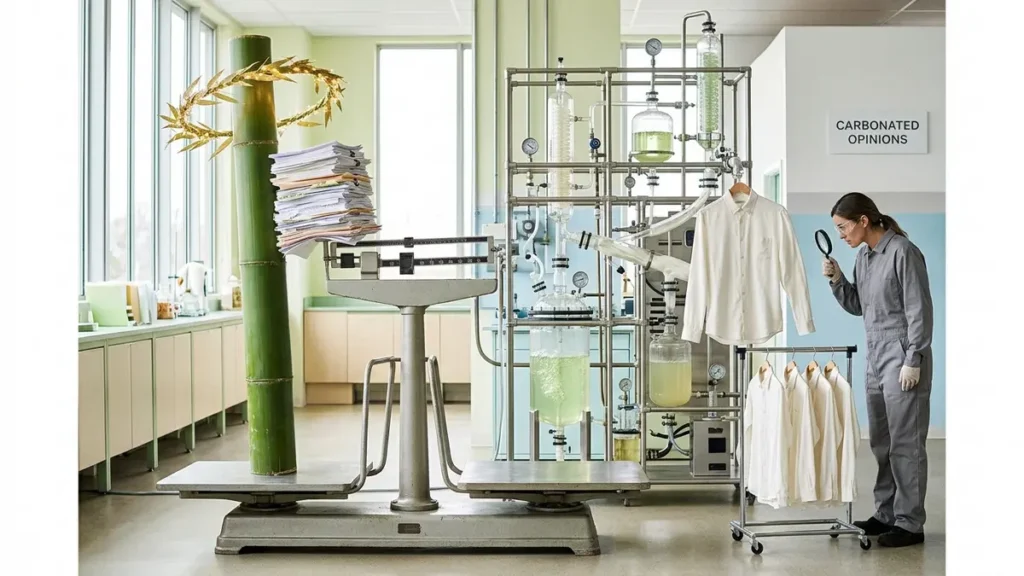
Bamboo fabric has an almost unfairly good opening pitch: a fast-growing plant, a green-looking label, and the promise that sustainable clothing can feel wonderfully soft. It’s the sort of story that makes a shopper feel virtuous before they’ve even reached the checkout. But bamboo’s botanical résumé and a finished shirt’s environmental record aren’t the same document. Somewhere after the nature-documentary opening credits, this story can become a chemistry lab.
The Plant Has a Halo; the Processing Has Paperwork
Bamboo can grow quickly and may require fewer agricultural inputs than some conventional fibre crops. That’s a legitimate advantage, not green propaganda. Still, it’s only the first line in the environmental ledger.
A tough bamboo stalk doesn’t simply wake up one morning as a drapey, soft garment. Turning plant material into a wearable textile takes processing, energy, water, and—depending on the method—chemicals that need responsible handling. The halo effect is doing a bit of unpaid overtime here: because the plant sounds low-impact, we assume every product derived from it inherits the same glow.
It doesn’t. A plant’s impressive résumé doesn’t automatically transfer to every item made from it. If only sustainability worked like a loyalty-points scheme.
“Natural” Is Doing Some Very Heavy Lifting
Here’s the label-level sleight of hand. Bamboo linen can be made through mechanical processing, but it is relatively uncommon and tends to produce a coarser fabric. Much of what is sold as bamboo fabric is actually rayon, often called viscose, made by chemically transforming bamboo pulp.
That doesn’t make it automatically terrible. It does mean “natural” is an incomplete description—rather like calling a restaurant meal “tomato” and declining to mention the fryer, freezer, or kitchen. Bamboo names the starting ingredient; it doesn’t tell us how the garment was made.
Bamboo’s environmental profile depends heavily on how it is processed: conventional bamboo viscose is made by dissolving pulp in caustic soda and carbon disulfide, while lyocell production can capture and reuse 99% of its solvent and water in a closed-loop system. This contrast shows why the word “bamboo” alone cannot establish that a finished textile is sustainable.
That’s the useful correction: the question isn’t whether bamboo is good or bad. It’s what happened between the stalk and the sleeve.
The Verdict: Better Question, Better Fabric
No fabric wins sustainability by name alone. A bamboo-based garment made in a more controlled process, designed to last, and worn repeatedly may be a more sensible choice than a supposedly virtuous alternative that pills, stretches, or spends its life at the back of a drawer.
Think of it like a household budget. The purchase price is visible, but the real cost includes all the little charges that arrive later. For clothing, those charges include manufacturing transparency, chemical management, energy use, durability, laundering, and whether the item actually earns its place in your wardrobe.
Look for clear information about the fibre type and production method, plus credible certifications where available. Then assess the boringly powerful details: Is the garment well made? Will you repair it? Will you wear it often? Can you care for it without turning every wash into a miniature resource festival?
Bamboo isn’t a miracle fabric, and it doesn’t need to be a villain either. Before buying the fabric with the greenest-sounding name, check how it was made, how long it will last, and whether you’ll wear it often enough to justify its environmental footprint. The label is a starting point—not a permission slip to stop asking questions.