
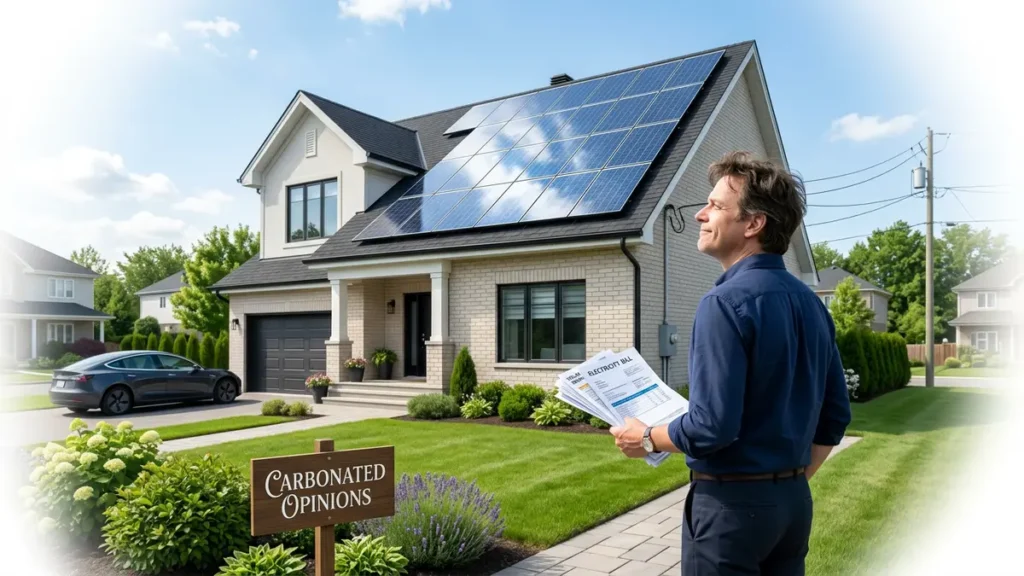
Residential Solar Panels — Your Roof’s New Side Hustle
Residential solar panels are the rare suburban upgrade that’s both sensible and mildly smug: a climate tool, a financial hedge, and a status symbol for people who collect rebates like hobbyists. They won’t “save the planet” by Tuesday. They will, however, turn your roof into a long-term appliance that quietly eats sunlight and spits out smaller bills—assuming you can tolerate paperwork.
The New Suburbia: Panels As Curb Appeal For The Conscientiously Anxious
Rooftop arrays used to scream “early adopter.” Now they whisper “I read my utility rate plan for fun.” Residential solar panels became normal thanks to incentives, falling costs, and the simple social fact that shiny rectangles signal effort. Not necessarily virtue—effort. And “energy independence”? Cute in theory. In practice, most homes are still romantically entangled with the grid. You’re not off-grid; you’re in a complicated relationship with it.
How Photons Became A Financial Instrument: Savings, Incentives, And The Math You’ll Actually Use
Yes, solar energy savings are real. No, the math is not a spiritual journey. Start with three numbers: your annual kWh use, your current $/kWh, and your roof’s realistic production. Then subtract the fantasy. Payback claims hinge on utility rates, incentives, and shading aligning; incentives themselves—tax credits, rebates, and net metering—vary widely and can change faster than neighborhood trends. Treat optimistic payback promises like diet soda for your electric bill: marketed as refreshing savings, worth reading the label twice.
The Roof Whisperer’s Guide: Sizing, Orientation, And Why South-Facing Slopes Get All The Praise
Before you debate panel brands, examine physics. A solar panel is only as heroic as its placement. Quick homeowner reality checks:
- Orientation: South-facing (in the Northern Hemisphere) usually wins; east/west can still work, just expect different production curves.
- Shading: One smug tree can kneecap performance.
- Sizing: Match the system to your actual usage, not your aspirational “we’ll become minimalist” persona.
This is photovoltaics, not a personality test.
When Things Go Dark: Maintenance, Warranties, And The Minor Art Of Not Burning Your House Down
Solar panel maintenance is mostly boring—good news. Panels often last decades, but the supporting cast may demand attention. Inverters are frequently the first to need replacement, while mounting, flashing, wiring, and connectors are common weak points because roof penetrations and small parts can cause big costs if poorly handled. Maintenance basics include keeping panels reasonably clean if dust or pollen is heavy, monitoring production with the app you’ll pretend not to check daily, and reading warranties like a grown-up—panel performance guarantees aren’t the same as labor coverage. Buying panels is like adopting a quiet, expensive pet—except it lowers your utility bill instead of chewing your slippers.
The Grid, Your Neighbors, And The Strange Politics Of Shared Sunshine
Your rooftop economics are heavily shaped by local policy: net metering, interconnection rules, permits, and utility attitudes. Translation: your “independent” solar life still requires municipal cooperation, utility approval, and the occasional public meeting where your neighbors learn new ways to fear change.
Take-Away: Not Magic, Just A Very Patient Appliance
Residential solar panels can deliver steady solar energy savings when you size them honestly, site them well, and accept that this is a decades-long relationship with your roof and your utility. Less miraculous salvation; more durable infrastructure—rewarding patience, paperwork, and a modest tolerance for bolts. Ready to stop renting electricity and start collecting sunlight? Subscribe for our cheeky, science-backed homeowner’s guide to making your roof actually pay its rent.