
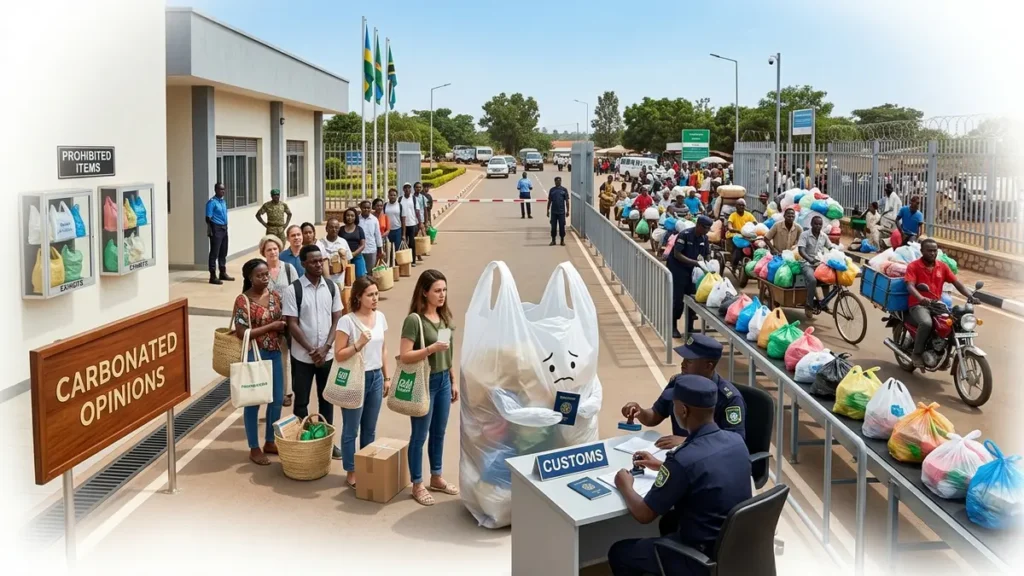
Rwanda Plastic Bag Ban: The Border-Crossing Success Story
The Rwanda plastic bag ban is the sort of policy that makes visiting travellers sit up straight at the border. Bags can be confiscated. Streets look strikingly tidy. Enforcement is not an inspirational poster gathering dust in a ministry corridor; it actually turns up for work.
That matters. Rwanda made cleanliness part of its public identity, and the absence of plastic snagged in drains and hedges is a powerful visual argument. But plastic bags did not receive the memo that national borders are meant to end supply chains. They simply acquired passports, smugglers and a slightly more dramatic career as contraband.
The Bag Ban That Actually Showed Up for Work
Rwanda’s 2008 prohibition on manufacturing, importing, selling and using polyethylene bags was unusually serious. Plenty of governments announce environmental policy and plastic pollution policy as though the press conference itself has cleaned the street. Rwanda paired the rule with inspections, confiscations and penalties, making the ban visible in daily life.
The result was a real public-space gain. Less disposable plastic litter meant cleaner roads, markets and waterways, while the government gained a reputation for being capable of enforcing an unpopular rule. In political terms, that’s no small achievement. A clean street is a campaign billboard that doesn’t need printing.
Still, this was urban planning with one city wall missing. Rwanda controlled what happened inside its borders, but neighbouring markets continued producing cheap plastic bags. The regional supply chain remained standing just outside the gate, selling tickets back in.
Six Months for a Shopping Bag
Once a bag is banned, it stops being rubbish and starts becoming evidence. Smuggling from the Democratic Republic of the Congo and other neighbouring countries turned an everyday packaging item into a cross-border commodity. Border confiscations became part of the policy’s choreography: the state demonstrating that it meant business, travellers discovering that a carrier bag could now cause administrative theatre.
The case of a smuggler receiving six months in prison gave the whole arrangement its sharpest line. Six months for a shopping bag is where litter control walks into courtroom drama, bow tie optional. It also reveals the uncomfortable mechanics of a tough ban: enforcement falls hardest on the people moving, selling or relying on the cheapest available packaging.
Rwanda’s streets won the beauty pageant. Meanwhile, the plastic economy relocated backstage, where it was harder to photograph and more expensive to police.
The Clean Streets, Expensive Alternatives Problem
The policy’s clean image came with a notably untidy receipt. Consumers and small businesses had to replace cheap plastic with legal alternatives that could cost several times more. That may be a defensible trade-off, but it is still a trade-off, not a magic trick.
Rwanda’s ban reduced the visible mess and reinforced its clean-government credentials, yet affordable replacements and regional cooperation lagged behind. That left businesses importing packaging, households paying more, and smugglers exploiting the gap between one country’s rules and another country’s prices.
A 2023 qualitative study of Rwanda’s plastic-ban transition found that packaging costs in the food-processing industry rose from RWF 29.55 to RWF 118.20 per unit—nearly a fourfold increase—while manufacturers reported shortages of suitable alternatives and continued reliance on imports, illustrating how enforcement can reduce visible litter while shifting costs onto businesses and consumers rather than eliminating the broader supply problem; the researchers also documented a black market in smuggled plastic from neighboring countries that initially undermined implementation. The study’s findings therefore support a more qualified assessment of Rwanda’s apparent policy success.
That is not an argument for letting plastic pile up because alternatives are inconvenient. It is an argument for admitting that a ban without a wider production plan is a wall built around one neighbourhood while the factory stays open next door.
A Strong Performance, With an Expensive Encore
Rwanda won something important: cleaner public spaces, a credible display of state capacity, and proof that environmental rules needn’t be ceremonial. Its neighbours retained the bargain of cheap packaging now and pollution costs later. Consumers and small firms, meanwhile, were handed a larger share of the bill.
The funny thing is, both sides can claim victory if they only show the audience their preferred stage. Rwanda can point to clean streets. Critics can point to smuggling and costs. The fuller answer is less glamorous: the ban improved what Rwanda could see and control, but it did not erase a regional plastic economy. As a plastic bag ban in Africa, it demonstrates both the appeal and the limits of national enforcement.
If a ban makes one country cleaner while sending the same problem across the border, is that a policy victory—or just excellent staging? Tell us who you think won.