
Banana Environmental Impact: Peel Back The “Eco-Friendly” Snack
The Banana’s environmental impact gets marketed like it’s self-evident: it’s a fruit, it has a peel, it comes in its own biodegradable packaging. Case closed, right?
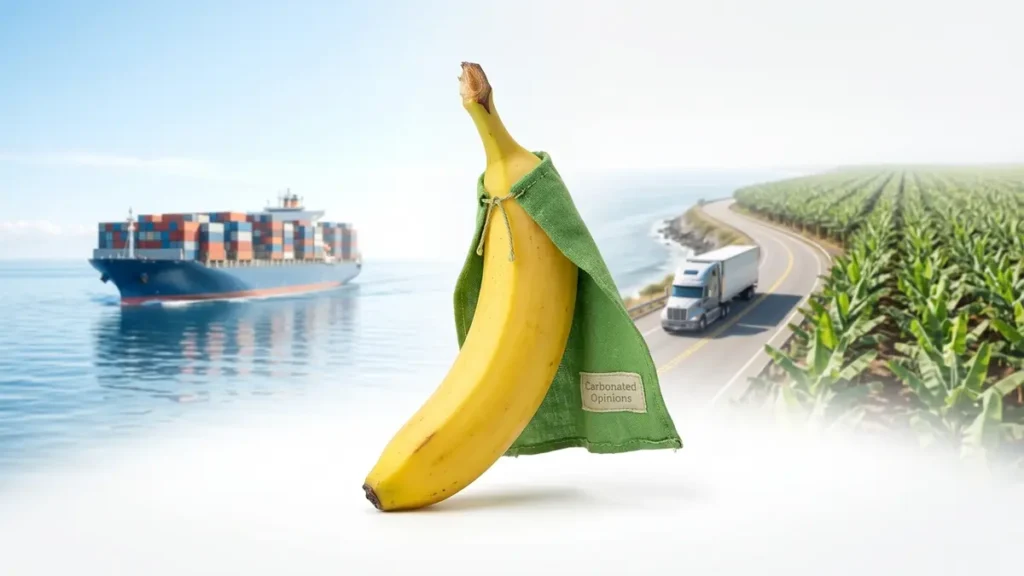
Except that “eco-friendly snack” is one of those tidy phrases that fits neatly on a mental sticker… and then falls off the minute you look at the receipt. The banana shows up wearing a little green cape, but sometimes that cape is stitched from long-distance shipping invoices, refrigerated containers, and a whole lot of agricultural compromise.
So let’s do what we do best: peel back the gloss. Not to ruin your snack. Just to replace the simple myth with the messy reality—calmly, clearly, and with the kind of dry data that lands like a punchline.
Anatomy Of A Fib — How The “Bananas = Green” Story Is Built
The fib works because it’s assembled from four believable parts.
Step 1: The visual cue. Yellow fruit + “natural” = harmless. Our brains love an easy shortcut. Bananas don’t look like industry. They look like a cartoon of nutrition.
Step 2: The logistics fade-out. Bananas aren’t shy travelers. They’re typically grown in the tropics and eaten far from the tropics, which means ocean freight, ports, trucks—and often refrigerated transport to slow ripening. You can call that “supply chain management.” The atmosphere calls it “added emissions.”
Step 3: The farm becomes a blur. Large-scale banana production can involve heavy pesticide use, lots of water in some regions, and monoculture risks—aka the agricultural version of putting all your money in one very fragile stock.
Step 4: The waste illusion. “But the peel is compostable!” Sure. Also: food waste happens, packaging exists in many retail settings, and not everyone composts. Biodegradable doesn’t mean “magically disappears in the real world.”
Myth Vs. Mess — The Tidy Belief And Its Messy Supply Chain
The myth: bananas are portable, cheap, “natural,” and come with their own wrapper. They feel like the gold standard of sustainable snacks.
The mess: bananas are a global commodity crop. That’s not inherently evil—it’s just not the same thing as “eco-friendly by default.”
Here’s the thing: most of the impact isn’t in the peel you toss. It’s upstream.
- Transport and refrigeration add energy demand and emissions. Not always the biggest slice (shipping can be efficient per kilogram), but it’s not zero—and it’s definitely not part of the cheerful supermarket narrative.
- Plantation land use can put pressure on biodiversity, especially when expansion bumps into ecosystems that were doing fine before humans needed year-round fruit consistency.
- Inputs and disease pressures (hello, monoculture) can mean more chemicals, more intervention, more “we’ll fix it later” thinking.
The banana-as-hero story is clean because it ignores the backstage crew.
Numbers You Can Snack On — Data As A Punchline
Let’s keep this refreshingly unromantic.
- Distance isn’t a vibe; it’s a variable. Many bananas travel thousands of kilometers. Ocean freight is relatively efficient per tonne-km, but “efficient” is not the same as “free.”
- Refrigeration is the quiet add-on. Keeping fruit in a controlled temperature range across ships, warehouses, and trucks is basically paying an energy bill so your banana doesn’t speedrun ripeness.
- Carbon footprints are life-cycle math, not moral scores. A carbon footprint counts emissions across production, transport, and disposal. So yes—your snack can be “just a banana” and still have a measurable climate tab. When you crunch the numbers, the banana carbon footprint often surprises people.
None of this means bananas are the worst thing you could eat. It means they’re… a product. An agricultural product with trade-offs. Like everything else humans try to make convenient.
If you want the botanical trivia while you chew, bananas are literally berries—no joke—per Banana. Nature loves a plot twist.
Takeaway — A Better Question Than “Is It Eco-Friendly?”
Bananas aren’t a climate hero by default. They’re a convenient snack that sometimes gets treated like a moral achievement.
Treat “eco-friendly” less like a halo and more like an invitation to ask three boring questions that work better than vibes:
- Where did it grow? (land use, inputs, local conditions)
- How did it move? (distance, refrigeration, mode of transport)
- What got traded off? (biodiversity, chemicals, waste)
Peel back the PR, and you don’t have to panic-buy only local carrots forever. You just stop giving a free pass to anything with a flattering wrapper—even when that wrapper is a peel.
Want the next myth dissected? Send a claim (or a grocery-aisle rumor) and we’ll run an “Anatomy of a Fib” on it.