
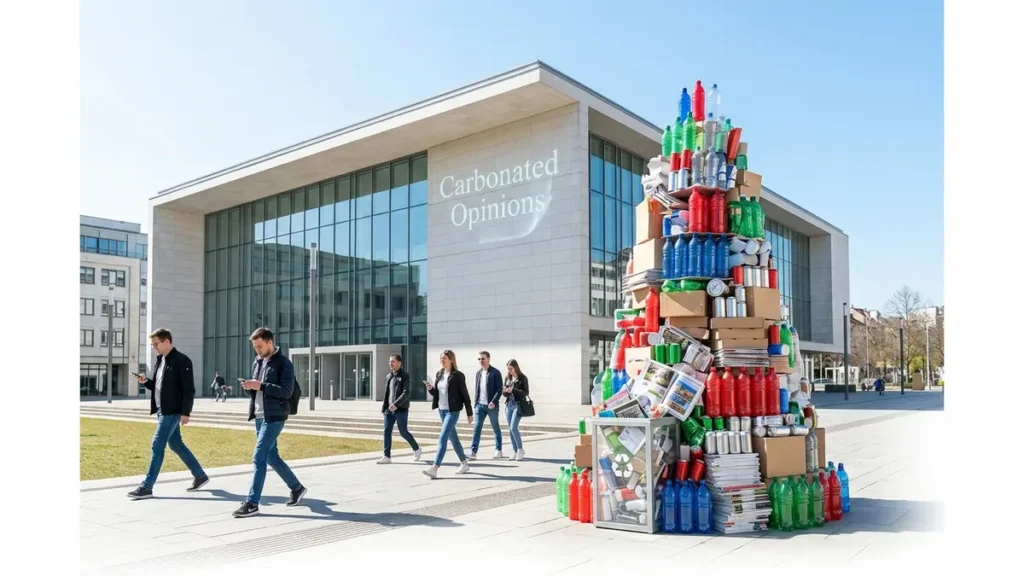
Waste Management Policy: Out of Sight, Out of Policy
City halls love distance. If the problem doesn’t fit in a ribbon-cutting photo, it gets filed under “later,” somewhere between “mysterious smell” and “please don’t open that.” That’s how waste management policy becomes a blind spot: our trash leaves the curb, and our responsibility supposedly evaporates with it.
But garbage doesn’t vanish. It relocates, sweats, ferments, and waits. It’s patient like that—more patient than any budget cycle.
For the official version of events, you can start with Waste management. For the real version, take a slow walk past a dumpster on a humid afternoon and let your eyes water.
Policy Hide-and-Seek: Where Rules Go to Nap
Rules about trash often begin as tough talk—“shall,” “must,” “enforce.” Then they age into something softer, like a leftover salad in the back of the fridge. The ordinance is still technically “there,” but it’s limp, damp, and nobody wants to deal with it.
Picture local regulations as slovenly roommates: they swear they’ll take the bag out, they pile it by the door, then they step over it for three weeks. Meanwhile the trash is auditioning for sentience, quietly expanding its territory.
And here’s the joke with teeth: consumption keeps sprinting like it’s training for eternity, while policy jogs in place, checking its phone. Infinite appetite, finite attention. We keep producing more stuff—more packaging, more single-use “convenience”—as if landfill space is a magical dimension cities can summon with a committee memo.
Waste doesn’t care about your “targets.” It cares about gravity, volume, and the fact that “guidelines” don’t stop a truck.
Recycling Myths: The Comforting Lies We Toss Around
Let’s talk recycling myths, aka the bedtime stories we tell ourselves so we can buy more things without tasting the guilt.
Myth one: “If it’s in the blue bin, it’s handled.” Sure. Handled like a greasy pizza box handled by a toddler: smeared, compromised, and headed for the nearest convenient exit. Contamination isn’t a footnote; it’s the main character. A single slick of peanut butter, a soup-stained paper cup, a salad container still wearing its dressing like perfume—suddenly your noble sorting ritual turns into an expensive game of “guess what we can’t use.”
Myth two: “Recycling solves everything.” That’s not a policy; that’s a faith. Recycling, as practiced by most households, is medieval penance: perform the ritual, feel cleansed, keep sinning. We rinse, we sort, we absolve ourselves—while the real moral hazard stays untouched: the flood of material designed to be thrown away.
Recycling can help. But it can’t resurrect soggy paper, it can’t unmix wish-cycled junk, and it definitely can’t outmuscle an economy built on constant replacement.
Landfill Math: Infinite Stuff Meets Finite Holes
Here’s the unromantic equation: landfill capacity is a hard limit, and we keep acting like it’s a suggestion.
A landfill is a tired beast with a strong stomach and no patience for our narratives. It takes our broken chairs, our novelty cups, our obsolete cables, our “just in case” purchases—then lies down under layers of dirt and waits to outlast the political will that created it.
Open the lid on the sensory reality: compacted refuse with that stale, sweet-rot smell—plastics warmed by sun, damp paper gone sour, old food turned indistinct. It’s not “away.” It’s just concentrated.
And landfills are like grumpy great-aunts: they take everything, judge quietly, and refuse to leave. Growth charts can keep pointing up, but a hole in the ground doesn’t care about optimism. Cubic meters fill. Trucks keep arriving. The beast keeps chewing.
If you want the clean definition, there’s Landfill. If you want the punchline, look at how quickly “temporary” dump sites become permanent geography.
Take-Away
When policy chooses convenience over consequence, the mess doesn’t stop—it just gets moved to wherever fewer people have to smell it. The fix starts with naming the rot, not pretending it recycles itself.
Tell your local rep they can’t legislate out of eyesight: demand a public audit of where the city’s trash policy actually ends (and where the landfill begins).