
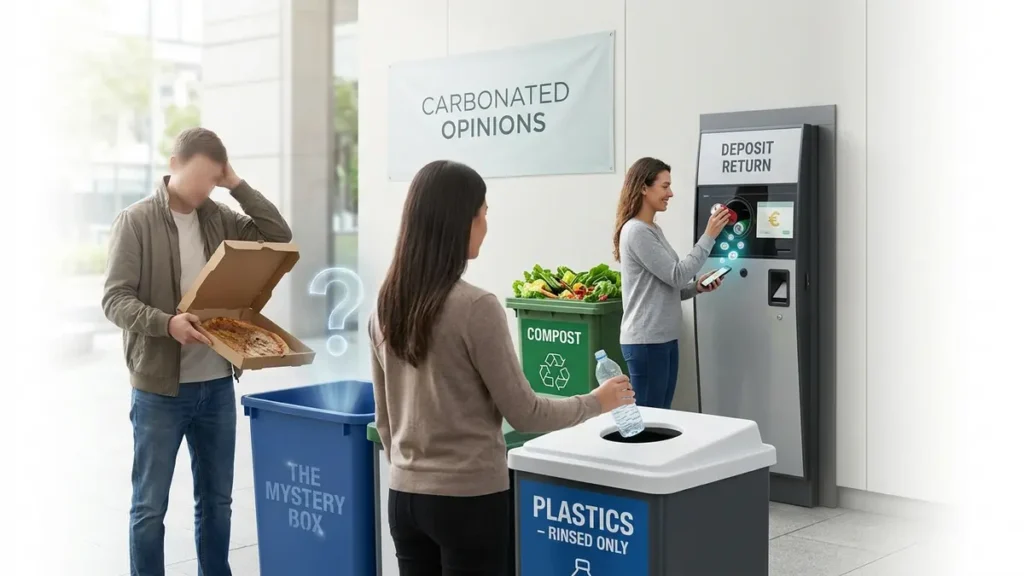
Recycling Contamination Drops When People Stop Guessing And Start Using Systems That Actually Work
Recycling contamination is what happens when the blue bin gets treated like a mystery box with civic branding. People toss in hopeful junk, whisper “maybe,” and send it down the chute like responsibility has been outsourced. The funny thing is, waste gets a lot less messy when the rules are boring, local, and dead simple. Clear signs help. Consistent pickup helps. Actual compost service helps. So do deposit return programs, because a tiny refund turns abstract virtue into something people will cross a parking lot for.
The Blue Bin Works Better When It’s Not Treated Like a Mystery Box
Most recycling problems don’t start at the sorting facility. They start in kitchens, with somebody holding a greasy takeout box and making a little gambling decision. If the box is soaked with oil, it’s not recycling; it’s a contamination delivery system. Same story with half-full containers, loose food, and random plastic odds and ends that “feel recyclable.”
When programs spell out what belongs inside, contamination drops fast. Rinse containers. Flatten cardboard. Keep food scraps and greasy paper out. Check the local accepted-items list instead of relying on packaging that promises spiritual redemption. Recycling works best when it’s treated like a system with rules, not a magical make-it-someone-else’s-problem slot.
Composting: The Rare Moment Food Waste Actually Goes Somewhere Useful
If regular trash is the dead end, composting is the rare career change. Fruit peels, coffee grounds, yard trimmings, and other organic scraps can move out of the landfill stream and into a process that turns rot into soil amendment. Which, honestly, is a better ending than fermenting in a garbage bag.
Curbside composting matters because it removes guesswork. People are far more likely to separate food waste when a bin exists, collection is regular, and the list is clear. Municipal organics programs can handle the soggy, smelly material that wrecks recycling and bulks up trash. It’s not glamorous. It’s banana peels and wilted lettuce getting a second act. But for waste systems, that’s real progress.
Deposit Return Programs: Tiny Refunds, Real Results
Deposit return programs succeed for a reason: they don’t ask people to be saints. They ask them if they want their money back. That’s a sturdier foundation for public policy than optimism.
Put a deposit on bottles and cans, make the return process easy, and recovery rates usually beat wishful curbside recycling by a wide margin. The incentive is immediate. The item list is simple. The outcome is visible. Instead of mixing containers into a larger stream and hoping for the best, these programs pull valuable material aside before it gets stomped, spilled on, or buried under everybody’s online shopping habit.
The Least Glamorous Fix Is Also The Best One: Make Less Trash
Here’s the part nobody puts on a shiny poster: the cleanest waste stream is the one that never shows up. Buying in bulk, using refillable containers, repairing things, and skipping overpackaged junk won’t win many branding awards. They do, however, cut the mess at the source.
Waste systems improve when people have real options, clear instructions, and a reason to care. That’s the practical version of hope. Not “everything is recyclable,” because it isn’t. More like this: sort better, compost if you can, return containers when there’s a deposit, and buy one less disposable thing this week. Let the landfill miss out for once.