
Dishwasher vs Hand Washing: Is the Sink Really Greener?
The sink has a convincing green halo. You can see the water you’re using, turn off the tap, and feel reassuringly in charge. A dishwasher, meanwhile, shuts its door and gets on with things out of sight. It’s easy to assume the visible job is the more careful one. But dishwasher vs hand washing isn’t really a contest between an appliance and a pair of hands. It’s a comparison between two routines, each with plenty of room for waste or restraint.
The answer depends on the machine, its load and cycle, and what happens at the sink. That’s less satisfying than naming a winner, but considerably more useful the next time you’re standing over a pile of plates.
The Dishwasher’s Quiet Efficiency
A modern, efficient Dishwasher recirculates water through a load of dishes rather than drawing fresh water for every plate. That can give it an advantage, especially when it’s full and running an efficient cycle. The sink’s green halo isn’t entirely earned just because the work is manual.
A four-country study found that electric dishwashers use less than half the water per item cleaned compared with manual washing, although the review also reports that best-practice hand washing can reduce water use by 60%, underscoring that the outcome depends on both the appliance and how dishes are washed.
That second finding is the detail worth keeping. An older machine, a lightly loaded cycle or extensive pre-rinsing changes the comparison. Energy is less straightforward too: heating water matters whichever method you choose, and the result depends on your machine and hot-water setup. “Dishwasher” isn’t an efficiency setting. It’s a box with settings, operated by a person.
The Sink Has Habits, Too
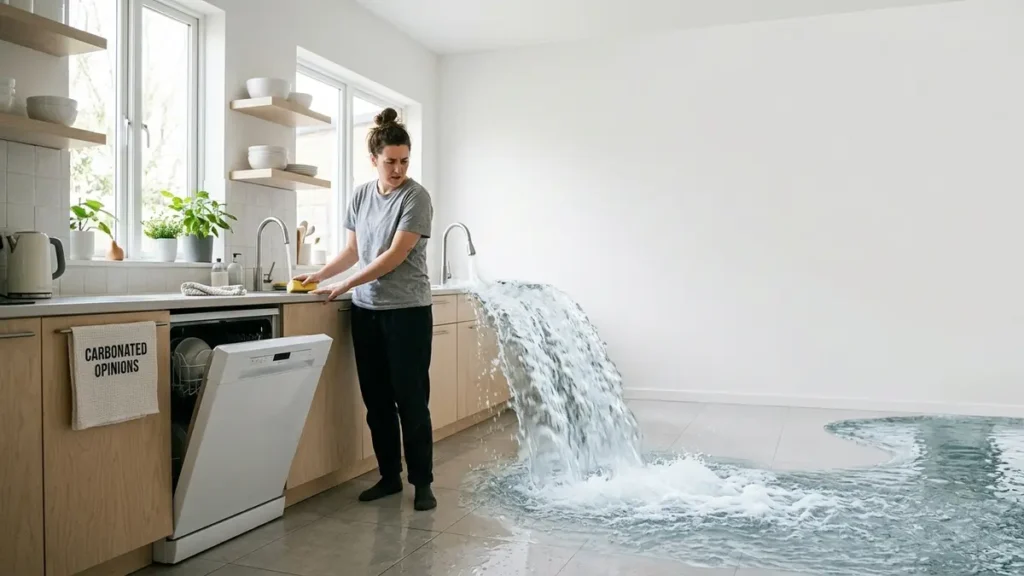
Hand washing dishes can look admirably simple. One sponge, a little soap, no machine humming away. The trouble is that the tap can become a small stream that keeps flowing while nobody’s really watching: during scrubbing, while you turn to stack a plate, or while you decide whether that pan needs another go.
We’re good at noticing deliberate actions and less good at noticing what continues between them. That makes a running tap oddly easy to overlook, even when it’s the main event in your water use. Comparing that routine with a full machine load won’t flatter the sink.
But the sink isn’t automatically wasteful. Fill a basin, wash several items together and rinse briefly, and you’ve changed the calculation. A few dishes washed thoughtfully may also make more sense than running a mostly empty machine. For water conservation, the useful question is not whether hands or machines seem more virtuous. It’s how much water the whole job actually takes.
A Better Wash, Whichever Method You Choose
If you use a dishwasher, give it a proper load without packing dishes so tightly that they can’t get clean. Check the cycle options; an efficient setting may be enough for everyday dishes. Scrape off food, but don’t turn pre-rinsing into a separate hand-washing session unless your machine genuinely needs it. Washing the dishes twice is an impressive way to lose an efficiency contest against yourself.
At the sink, a filled basin helps put a boundary around water use. Otherwise, turn the tap off while you scrub and keep rinsing brief. These aren’t heroic measures. They’re simply ways of preventing a routine task from using resources when no cleaning is happening.
There’s no need to turn every teaspoon into an environmental audit. Notice the repeat habits instead: the half-empty loads, the automatic pre-rinse, the tap left running while you hunt for a clean towel. Those are usually easier to change than the entire kitchen.
The Greener Choice Is a Routine
A modern, efficiently run dishwasher will often use less water than ordinary hand washing. A careful person at the sink can narrow that gap, and sometimes the circumstances favour washing by hand. Neither method earns a permanent green badge just by existing.
Next time you wash up, notice what’s actually using the water: the machine, or the habits around the sink. The answer may be less glamorous than choosing a side, but it’s also something you can do something about. The plates won’t mind.