
COP Climate Summit: Same Script, New City
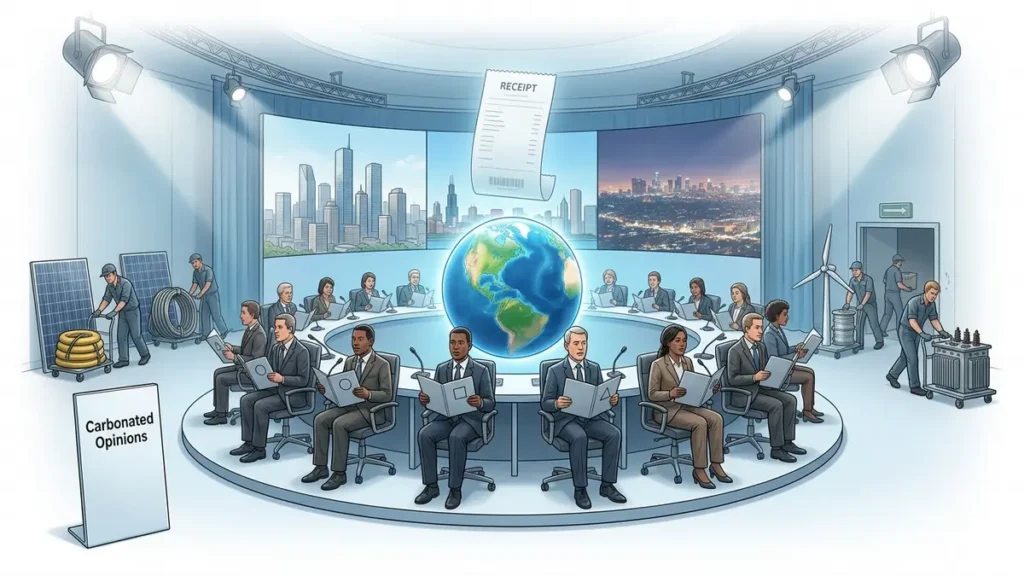
The COP climate summit is climate diplomacy’s annual season premiere: fresh skyline, fresh logo, leaders beneath lighting calibrated to suggest history is happening right this second. Then come the speeches, the handshakes, the solemn promise to rise to the moment—and the planet, rude little metrics goblin that it is, asks for receipts. Every year, the venue changes faster than the underlying emergency. It’s a global game of musical chairs, except the chairs are conference halls and the soundtrack is supplied by a warming planet.
Welcome to the Climate Diplomacy Feed
The United Nations Climate Change Conference has become a kind of international live feed: everybody posts urgency, everybody likes ambition, and nobody wants to be caught holding the unpopular opinion that action costs money.
Each gathering arrives with its own visual identity and ceremonial optimism. New city. New slogan. New montage of delegates striding through security cordons with the determined expression of people about to schedule another meeting. The visual language says season finale. The policy rhythm says “we’ve seen this before.”
That doesn’t mean the summit is pointless. Getting nearly every country in the room matters. But COP has developed a weird online habit: treating attendance, announcements, and adjectives as if they’re interchangeable with delivery. A declaration can trend globally. It cannot insulate a coastal neighborhood, rebuild a grid, or retire a fossil-fuel project by sheer vibes.
The Great Negotiation: Now With 197 Side Quests
Climate negotiations are hard because the world is hard. Countries have different histories, incomes, energy systems, vulnerabilities, and very different levels of enthusiasm for paying the bill. That’s real. So are disputes over finance, fossil fuels, adaptation, trade, and who must move first.
But procedural complexity can also become a very elegant fog machine. A sentence gets negotiated until “urgent” sounds like a suggestion from human resources. “Ambition” is the summit’s most overbooked guest: invited by everyone, sighted by no one, name-checked repeatedly in the closing statement.
The language often lands like a smoothie blended from urgency, compromise, and enough diplomatic foam to obscure the ingredients. Nobody wants an agreement to collapse. Fair enough. Yet a deal designed to offend no one can end up offering the climate roughly the protection of a terms-and-conditions checkbox.
The Paris Agreement gave the world a common destination. The recurring problem is that nations keep arguing over the route while the vehicle is already rolling downhill.
The Final Act Is Always “More Work Remains”
Here’s the less glamorous truth behind the rotating backdrops: COP meetings can produce real frameworks and incremental gains, but their polished promises don’t magically close the implementation gap. The summit can announce momentum; domestic politics, budgets, infrastructure, and enforcement have to carry it home.
The UNEP’s 2024 emissions-gap assessment underscores the distance between COP climate promises and implementation: current policies put the world on track for approximately 2.9°C of warming by 2100, while fully meeting existing national commitments would still result in an estimated 2.4–2.6°C, according to the assessment.
That’s not a footnote. That’s the plot. We’re not lacking for communiqués, panels, or carefully staged concern. We’re lacking the speed and scale that turns targets into lower emissions, funded adaptation, and systems built for the weather already arriving.
Stop Confusing the Trailer With the Film
The problem with COP isn’t a shortage of drama. It’s that the drama keeps replacing the deadline. A new host city can refresh the backdrop, but it can’t substitute for measurable climate action. No communiqué has ever lowered a temperature.
So yes, keep the summit. Keep the pressure, the negotiating rooms, the uncomfortable global conversation. But stop grading the event on applause lines and group photos. Grade it on what happens when the delegates fly home: laws passed, money delivered, projects built, emissions cut.
Follow the fizz, question the fury, and ask the only summit question that matters: what happens after everyone goes home?