
Congestion Charge: The Price of Pretending Roads Are Infinite
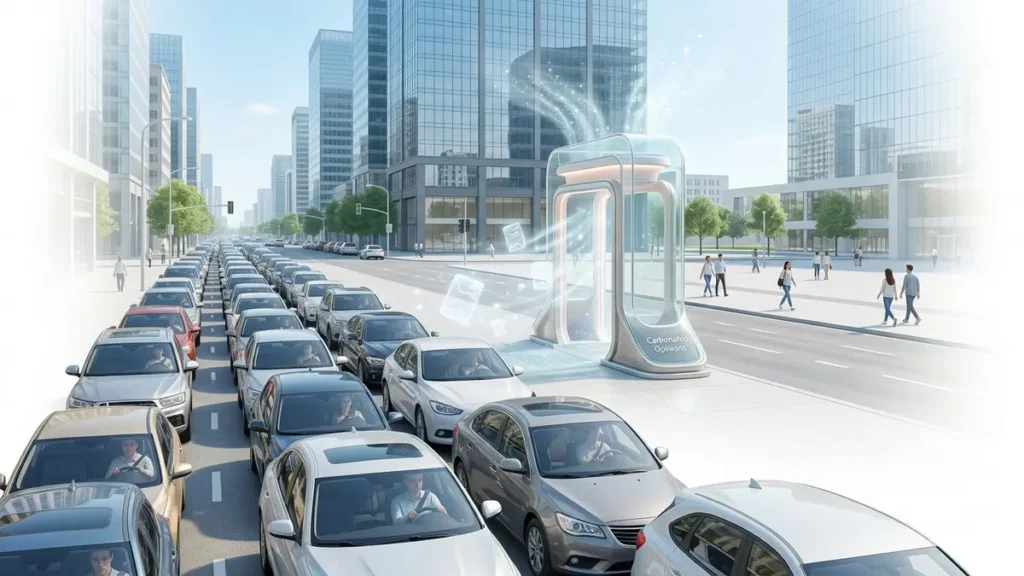
The modern congestion charge is one of those policies that feels both clever and faintly embarrassing. Clever, because the congestion charge can reduce traffic reduction pressures and ease urban air pollution. Embarrassing, because it requires admitting we spent decades designing streets as if every human destiny involved a steering wheel. The city, in other words, is the patient finally prescribed the medicine it spent years insisting it didn’t need. And now we’re all acting surprised that breathing room has value.
The Ancient Art of Paying to Undo Your Own Mistake
Cities didn’t arrive at congestion pricing through a burst of enlightened planning. They got there the old-fashioned way: by making room for more cars, watching that room vanish, and then discovering that road space behaves less like a frontier and more like a cramped attic. You clear a corner, and somehow more boxes appear.
That’s the historical irony. For years, the dominant assumption was that traffic was a supply problem. Add lanes, widen approaches, smooth the flow. Then the flow politely filled every available inch. So the fee arrived not as a visionary flourish, but as a late annotation in the civic diary: perhaps unlimited car access to the busiest streets was never the mark of freedom we imagined.
A congestion charge is really a toll on collective memory. We pay, in cash, to reverse the consequences of treating shared street space like an unlimited buffet.
Cleaner Air, Fewer Horns: The Helpful Side Effect Nobody Put on the Poster
Once fewer vehicles pour into a packed center, the obvious gains show up almost immediately. There’s less idling, less stop-start misery, less noise ricocheting between buildings, and some relief from urban air pollution. Pedestrians get a little more dignity. Buses stop performing as stationary landmarks. The street begins to function as a place again, not just a storage system for impatience. That is traffic reduction, not civic magic.
The funny thing is, these benefits are often presented like bonus features, as if cleaner air were an accidental garnish rather than the point. But that framing is convenient. It lets everyone avoid saying the impolite part out loud: the original car-heavy arrangement wasn’t working terribly well.
Success here often looks suspiciously like subtraction. Remove some traffic, and the city remembers it has lungs.
When a Tax Becomes a Test of Civic Faith
Of course, a charge only changes behavior cleanly if people believe the inconvenience serves a visible purpose. If the fee feels like random punishment, public hostility writes itself. If it clearly supports better buses, trains, sidewalks, or cycling links, the policy starts to look less like civic scolding and more like basic housekeeping.
That’s why the real advantage appears when the charge sits inside a broader, credible transport system rather than hovering above it like a moral lecture. A useful receipts point here is that Beaudoin and Lin Lawell’s review found congestion delay in urban U.S. areas has more than tripled over the past three decades, alongside an 83% increase in auto travel and only a 16% increase in transit travel; in their assessment, public transit can help at the margin, but efficient pricing of auto travel remains necessary to meaningfully address congestion.
That’s the awkward lesson. Better transit matters, but pricing still does the work of telling people that scarce street space is, in fact, scarce. The fairness question never disappears, and it shouldn’t. But neither should the equally basic question of whether everyone else should subsidize the privilege of one more car in one more bottleneck.
The Invoice Arrives Eventually
Congestion charges work best when they remind us that cities are not malfunctioning parking lots. They are dense, shared habitats, and the bill for driving through the most crowded parts was always going to arrive sooner or later. This is simply the itemized version.
If the road is crowded, maybe the problem isn’t your journey—it’s the number of journeys we insisted on making by car.