
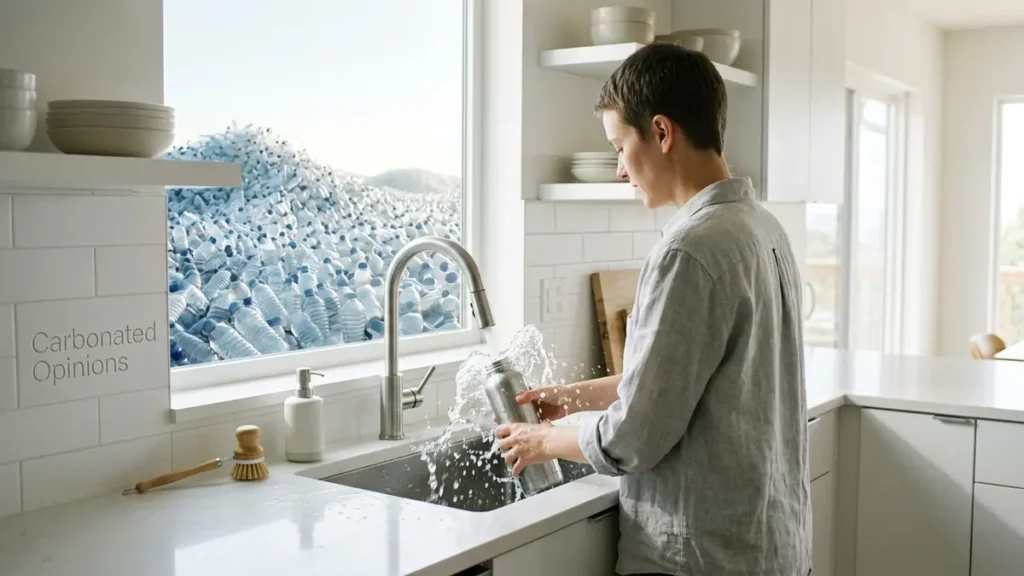
Reusable Vs Disposable: Does Washing Actually Use More Water Than Making?
That viral line—“reusables are pointless because washing uses more water than making a disposable”—sounds devastatingly tidy. One dunk in the sink, and poof, your virtue evaporates.
But real-world reusable vs disposable math isn’t a single dramatic rinse. It’s a lifetime tab. And most of the time, the water you spend cleaning a reusable is a rounding error next to the water tied up in making, packaging, shipping, and binning a stream of disposables.
Think of the claim like a stage trick: the flashy number is the assistant in sequins. The real accounting gets slipped behind the curtain.
Anatomy of a Fib: How the “washing uses more water” calculation is built
Here’s the standard recipe for the “washing is worse” argument (it’s always the same, just with different props):
1) Pick one wash. Usually a worst-case one: hot water, long rinse, half-full sink, no efficiency context.
2) Compare it to one disposable. Not the whole chain of disposables—just the object in your hand, as if it appeared via stork.
3) Conveniently crop the system boundary. Manufacturing water? Often missing. Packaging? Missing. Transport? Missing. End-of-life? Missing.
4) Declare victory with a single number. Because single numbers feel like truth, even when they’re just selective counting.
This is exactly why environmental folks lean on Life-cycle assessment: it forces you to count the whole story, not just the scene that makes the best meme.
And yes, dishwasher water usage or a long handwash can use real water—especially when washing reusable water bottles with ritualistic scalding or exhaustive rinses. But a single wash is rarely the dominant term—especially across dozens or hundreds of uses. That “one wash vs one item” framing is the sock-mismatch logic of sustainability: one weird laundry day doesn’t mean you should buy new socks every week.
Myth vs. Messy Reality: When reusables win — and when they don’t
Let’s do the quick “myth → reality” sketch people skip because it’s less tweetable.
Myth: Washing a reusable once cancels the benefit.
Messy reality: Benefits depend on how many times you reuse and how you wash.
- Reusable gets reused a lot (mug, cutlery, lunch container): Usually wins. The manufacturing “startup cost” gets spread out.
- Reusable gets bought with enthusiasm, then abandoned (the infamous bottle graveyard): Loses. You paid the manufacturing cost and never amortized it.
- Hot-water-heavy cleaning (sterilizing, long soaks, scalding rinses): Can shrink the advantage, sometimes dramatically.
- Efficient cleaning (full dishwasher loads, short rinses, no ritualistic boiling): Keeps the water/energy per use low.
Even “water use” itself isn’t one simple thing. When someone throws around a giant number, ask: is it direct tap water, or an upstream Water footprint style total that includes water used (and polluted) across supply chains? Both can be useful. Mixing them casually is how you get confident nonsense.
So yes: there are cases where a reusable doesn’t win. But they’re almost never the ones implied by the meme. The honest question isn’t “does washing use water?” (it does). It’s “compared to what, across how many uses, with which washing method?”
Practical Fixes: Make your reusable habit water-smart
If you want reusables to actually do their job—saving resources instead of just signaling good intentions—focus on the levers that move the math.
- Batch your washing (dishwasher beats dribs and drabs). A full load spreads water across lots of items. A half-empty sink bath is basically custom water-per-item pricing. Prioritize full loads to minimize dishwasher water usage.
- Drop the “scalding = clean” superstition when you can. For everyday items, a normal wash is usually enough. Save extreme hot cycles for when they’re actually needed.
- Quick-rinse right after use. That 5-second rinse can prevent the 5-minute scrub later. It’s the cheapest form of “dishwasher water usage” reduction: less stuck-on gunk, less drama.
- Choose designs that don’t punish you. Wide-mouth bottles and simple lids clean faster than multi-gasket, straw-maze contraptions. If an item requires a tiny plumbing apprenticeship to wash—especially when washing reusable water bottles—it’s going to tempt you into wasteful cleaning—or into not using it.
- Air-dry instead of towel-drying when possible. Not because towels are evil, but because towel habits often lead to extra rewashes (“Where did this smell come from?”). Air does the job quietly.
If you’re the kind of person who likes a concrete target: the “break-even” point is usually about repetition. One or two uses won’t repay a higher manufacturing footprint. Dozens often will. Hundreds? Now you’re making the disposable look like the expensive habit.
Take-away: count like an honest scientist, not a meme
Reusables usually come out ahead—but only when you run the numbers like a grown-up. The real variable isn’t whether you wash. It’s how often you reuse and how efficiently you clean.
The magician’s flourish is the single scary wash statistic. The trick you’re supposed to miss is the mountain of disposables you didn’t have to make, ship, and toss.
Want a clear wash-count for your favorite reusable? Tell us the item and your washing routine (handwash vs dishwasher, hot vs warm, how often), and we’ll estimate the break-even reuse number.