
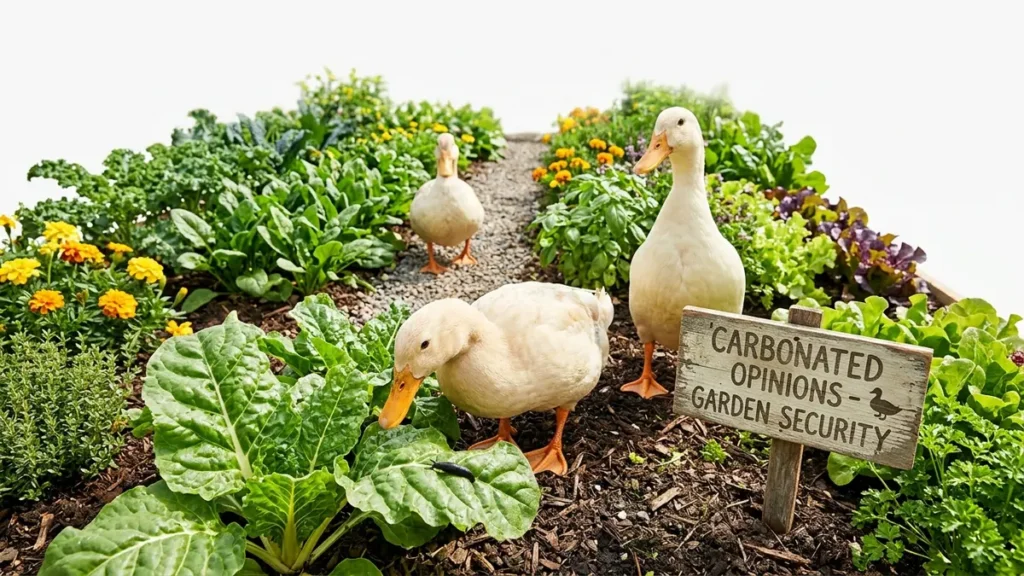
Natural Pest Control: Why Your Garden Needs a Duck Security Team
If a “duck security team” sounds like a whimsical flex, you’re not alone. But natural pest control isn’t always about fancy gadgets or mystery sprays—it’s often about nudging the mini-ecosystem you already have. And yes, sometimes that means recruiting a few Duck employees who work for snacks.
The misconceptions usually arrive in a neat little trio: ducks eat everything (including your lettuce), they’ll wreck your beds, and they’re way too high-maintenance to be worth it. The calmer truth: ducks can be remarkably targeted pest managers when you match the right birds to the right job, and—this part matters—when you stop expecting them to be the entire strategy.
Pond Patrol: What Ducks Actually Eat (and What They Don’t)
The big myth is that ducks show up and immediately choose violence against your plants. In reality, most backyard ducks are opportunistic foragers with strong preferences: soft-bodied insects, slugs, snails, and whatever looks like an easy win.
Think of them like specialized contractors. They’re excellent at “slug demolition.” They are not your gardening crew. They won’t prune. They won’t trellis. And if you ask them to “weed,” they’ll interpret that as “taste test.”
A helpful missing piece is that “duck” isn’t one uniform product. There are differences in foraging intensity and body type across breeds, and you’ll notice it in behavior: some are more “dabble and patrol,” others are heavier and less nimble. If you’ve got delicate seedlings, any duck can be a liability at the wrong time—not because it’s evil, but because it’s a bird with feet and opinions.
So the practical correction is this: ducks are more likely to target pests than to deliberately mow your garden down, but they can still trample tender areas if you turn them loose where you’d never even send a clumsy human in boots.
Feathered Forensics: Measuring Effectiveness vs. Other Natural Pest Control
Here’s the intuition trap: we want one heroic solution. A little squad of ducks, a dramatic before-and-after, end scene. But natural pest control works best as a portfolio, not a lottery ticket.
Compared with other approaches—barriers, hand-picking, timing your planting, habitat tweaks, and Biological pest control—ducks are a strong “mobility plus appetite” tool. They’re especially helpful when pests are concentrated and easy to reach: think slug and snail pressure in damp seasons, edges of beds, paths, and under dense foliage.
Where they’re not magical: pests that live inside plants, fly in from elsewhere, or show up faster than a duck can patrol. Also, if your garden is mostly raised beds tight with tender greens, ducks may be more disruption than benefit.
The calm reality check: ducks can reduce pest load and interrupt life cycles, but they’re rarely a solo solution. They’re more like a slow, polite Roomba for snails—effective in the right rooms, confused by stairs, and prone to bumping into furniture if you don’t set boundaries.
Guard Duck Logistics: Practical Steps for Responsible Integration
If you want the benefits of ducks in garden without turning your plot into a muddy rumor factory, treat it like a trial run—with basic controls.
Start small. A few ducks can cover more ground than you think, and “more” isn’t automatically better if you don’t have the space, shelter, and cleanup plan. Provide secure housing at night (predators don’t care about your wholesome intentions) and consistent water access. Ducks don’t just drink—they rinse food, clear nostrils, and generally behave like tiny, determined mess engineers.
Timing is your best friend. Don’t introduce them to fragile seedlings and then act surprised when little stems lose the argument. Use them when plants are established, pests are active, and you can rotate access—paths, perimeters, and problem zones—rather than opening every bed like it’s a buffet.
And yes, manage expectations. Ducks are low-chemical helpers, not zero-effort pets. The work you avoid in slug patrol, you pay back in water management, bedding, and keeping their “patrol routes” from becoming mud lanes.
Take-Away: A Myth-Free Way to Try It
Ducks can be a low-tech, low-chemical complement to an integrated pest strategy—especially for slugs and snails—when introduced thoughtfully. They’re helpful pressure relief, not a miracle cure.