
Mold In Compost: Not The Enemy, Just Doing Its Job
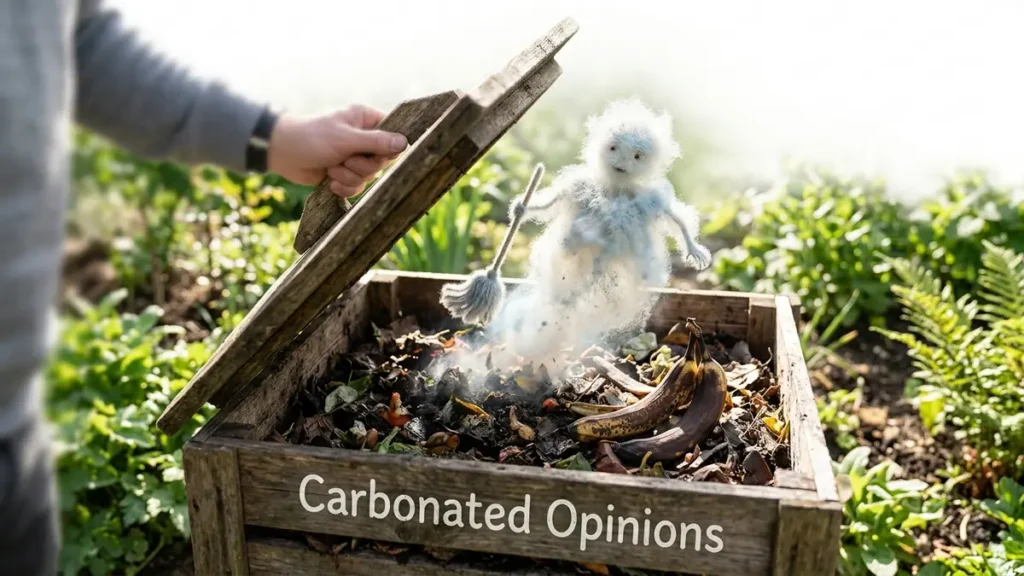
Mold in compost is the part of the job nobody frames and hangs in the break room. It shows up uninvited, wearing a fuzzy coat, clocking in anyway. You lift the lid and get hit with that damp-basement breath—earthy, sour, a little mushroom velvet—and your brain screams, “Contamination!” Relax. Most of the time, that fuzz is the underpaid janitor of decomposition, scrubbing yesterday’s salad into tomorrow’s soil. Compost isn’t a sterile lab. It’s a negotiated peace treaty between your food scraps and time, and it’s supposed to look a bit feral.
The Microbial Cast: Who’s Really Living In Your Bin
Your compost pile is a punk show with no VIP section. Everyone’s sweating. Everyone’s loud. And the headliners are microscopic. Fungi arrive first like grimy stagehands, hauling complex stuff into smaller pieces. Bacteria swarm in after—tiny bouncers in a hot crowd—making heat, breaking down sugars, and turning “oops, I forgot the spinach” into something that doesn’t offend nature. Then come the worms if you’ve built them a decent venue: not too wet, not too dry, no chemical drama. They’re the heroic roadies, dragging bits down, shredding, remixing. The smell tells you what kind of show you’re running. Healthy compost smells like wet leaves and damp soil with a tang—alive, not dead. If it smells like a swampy trash can that lost a fight, the lineup’s getting out of control. And those discarded objects? They have personalities. A banana peel is your ex-bandmate: talented, a little smelly, still somehow earns an encore—if you give it the right conditions.
Mold Signal Vs. Mold Sabotage: When To Relax And When To Intervene
Think of mold as bin gossip. Some of it is harmless chatter: white, gray, or blue fuzz on bread, fruit skins, or coffee grounds. That’s a progress report. The pile is metabolizing. But sometimes the gossip is a warning text at 2 a.m.
- Things you can usually ignore: light, velvety patches on scraps; a mild earthy funk; a pile that’s damp like a wrung-out sponge.
- Things that mean intervene: a slick, smothering mat that looks like wet felt; a sour, pickled stench or ammonia slap; clumps that stay slimy, cold, and unchanged.
Translation: you’ve overfed greens or drowned the airflow. Composting needs oxygen the way your kitchen needs a window when something’s burning. Learning how to compost food scraps is mostly about balance—feed the microbes, but don’t give them a swamp.
Fix-It, Don’t Freak Out: Practical Composting Tips To Keep The Rot Productive
Productive rot is the goal. You’re managing a crowded little city that runs on scraps and has zero respect for your aesthetic needs. Here are compact composting tips and fixes that actually work:
- Layer like you mean it and manage volume: every time you add wet greens (veg peels, leftovers, coffee grounds), cover them with browns—dry leaves, shredded cardboard, paper. Think lasagna, but for regret. Chop big stuff so it decomposes faster and bury stinky items deeper so the pile’s workers handle it out of sight.
- Aerate and drain: fluff, stab, turn, or mix to restore air. If the bin is compacted, it’s basically a landfill audition. If it’s dripping, add dry material and crack the lid. If you’re sensitive to spores, wear a mask and don’t huff the bin like it’s fine wine.
So keep your pile breathing. Keep it balanced. Let mold do its shift instead of getting fired for looking weird.
Call-To-Action: Try one experiment this week: bury your coffee grounds in a small bin corner, monitor for a week, and report back—brag about the smells or confess the failures.
Mold is the underpaid janitor of the soil—gross, necessary, and fixable. Nudge the system, and your scraps become dirt instead of future landfill regret.