
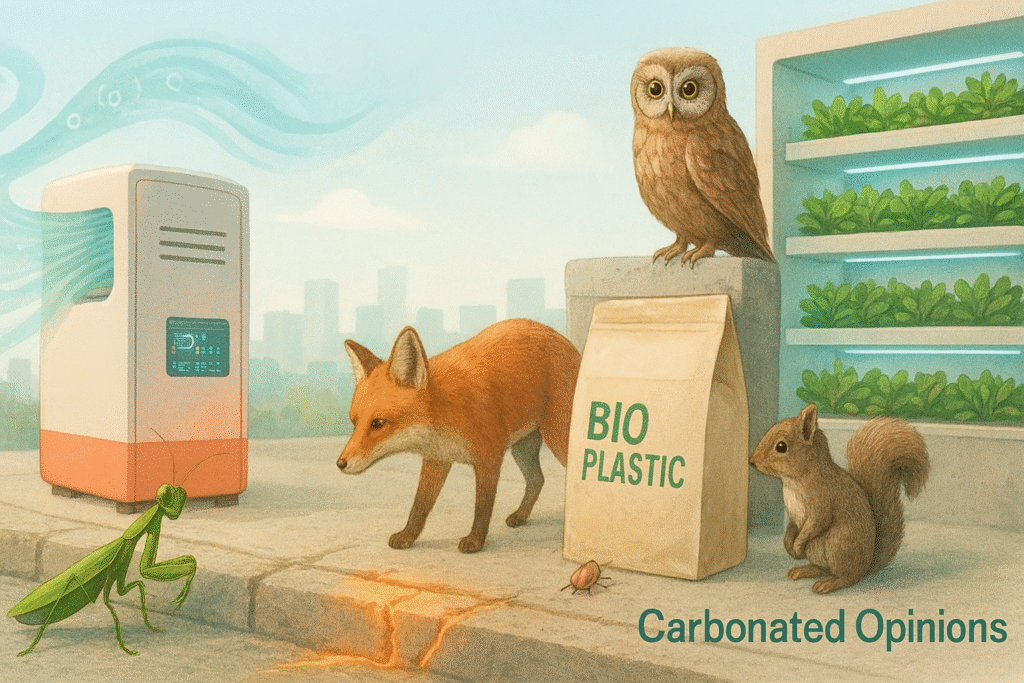
A lot of modern eco-technology reads like it was borrowed from a spaceship manual. That is not a complaint. It is exciting. These inventions are strange, practical, and a little needy — like a genius friend who forgot to pay rent.
Direct air capture — A vacuum for the atmosphere
Imagine a giant appliance that pulls CO2 straight from the air. That is the idea behind Direct air capture. Big fans push air through filters or liquids that trap carbon. Heat or other inputs then release concentrated CO2 for storage or use. It is basically a Roomba for the sky — except it charges money and requires industrial-strength patience. DAC can tackle emissions that are hard to stop, like those from planes. The downsides: it needs lots of energy and cash today. Clean power and cheaper systems will decide if it leaves sci‑fi and joins daily life.
Self-healing concrete — Buildings that bandage themselves
Cracks in concrete are boring but costly. Enter self-healing concrete. Some mixes use tiny capsules of glue or specially designed bacteria that spring into action when water and oxygen arrive. Others use smart polymers that flow into a gap and harden. The payoff is longer-lasting roads and fewer emergency repairs. Think of it like a pet with a PhD in patching: low fuss, very useful, slightly uncanny. It cuts the need to remake heavy infrastructure, which can lower overall emissions. Still, it is not magic — cost and standards will shape adoption.
Bioplastics and engineered enzymes — Trash that forgets to RSVP
‘Plastic that disappears’ sounds like a bedtime story. Bioplastics and enzyme-based recycling try to make it reality. Some plastics are made from plant sugars and can break down more easily. Researchers have also found enzymes that can chew up stubborn plastics, speeding up recycling. Caveat: many so-called bioplastics need industrial composting, not a backyard pile. And enzymes are promising but must be scaled safely and affordably. This field feels like chemistry learning to be tidy.
Vertical farms and aeroponics — Skyscrapers that grow salads
Vertical farming stacks crops in controlled layers, often using aeroponics or hydroponics. Lights, mist, and nutrients replace soil and weather. The benefits include big water savings, faster harvests, and food grown close to cities. The trade-offs: energy for lights and climate control can be high, and not every crop suits indoor farms. Paired with clean energy, these farms could cut food miles and make fresh greens cheaper in cities.
Take-away
These inventions are real tools, not magic tricks. Some will scale fast, others slowly. What they share is curiosity and potential. If you want to help, try one small thing: eat a bit more local, cut single-use plastics, or read up on the tech. The future will be part odd gadget, part steady fix — like a sci‑fi toolkit for a stubborn planet.