
Coral Reef Threats Historical: When The Pacific Became A Science Fair Nobody Asked For
- The sun is doing its best brochure impression over a ribbon of Pacific blue. U.S. scientists in crisp white coats bustle around Bikini Atoll like they’re about to unveil a new dishwasher, not vaporize a lagoon. The locals have been relocated with the kind of polite optimism usually reserved for “this won’t hurt a bit.” And the coral reef—ancient, intricate, quietly minding its calcium-carbonate business—did not RSVP to what may be the most aggressive group project in modern history.
If you’re looking for coral reef threats historical enough to make today’s warming seas look merely inconsiderate, congratulations: we found the time humanity treated a living ecosystem like a billiard table. The atoll looked like a postcard that someone used as a cue-sport practice range—because we did.
Why We Thought This Was A Good Idea (Historical Context, Aka “Because War”)
World War II had ended, which is when reasonable societies pivot to rebuilding, grieving, and maybe—just throwing this out there—not inventing new ways to rearrange oceans. America, however, had a different hobby: figuring out how ships would handle nuclear weapons. Not whether we should use them again (awkward), but how well battleships could take a cosmic punch to the face.
The plan was sold as “testing naval survivability,” which is a charming phrase that translates to: “We’d like to turn an island community into a laboratory and see what floats.” It was also about demonstrating power, because nothing says “peace” like staging an apocalypse with clipboards.
Why an atoll? Because it was remote, photogenic, and politically convenient—three qualities that have launched many bad ideas, from colonialism to cryptocurrency. Optimism and hubris look identical when they’re wearing a flag.
Able, Baker, And The Day The Ocean Sneezed
The event was called Operation Crossroads, which sounds like a summer camp for decision-makers who enjoy moral ambiguity. Two main tests mattered here: Able (airburst) and Baker (underwater), with Baker being the one that taught the ocean an extremely dirty trick.
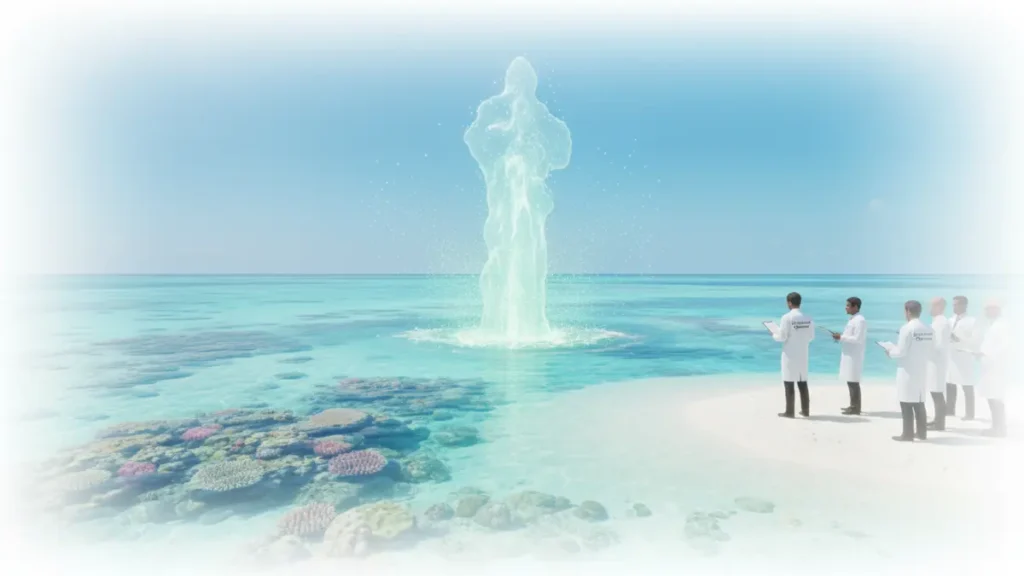
An underwater nuclear detonation is not just a bigger bomb. It’s the sea becoming a pressure cooker with resentment issues. When Baker went off beneath the lagoon, the water didn’t politely absorb the blast. It erupted—an enormous column of water and pulverized reef rock punching upward like Poseidon trying to cancel the whole experiment.
The result wasn’t merely “boom.” It was spray. Radioactive spray. The ocean essentially sneezed, and everyone downwind got to be the tissue. Ships that survived the initial shock were then gift-wrapped in contamination, as if the sea had decided to leave a glitter bomb of isotopes on every surface.
What It Did To The Reef (And The People Who Lived Off It)
Coral reefs are not scenery; they’re infrastructure. They buffer storms, cradle fisheries, and build habitat one slow limestone receipt at a time. Bikini’s reef took the kind of immediate physical trauma that ecosystems generally prefer to avoid: blast waves, crater formation, and debris raining back down like a reverse snowfall of bad choices.
In plain terms: the underwater detonation carved up the lagoon floor and shattered reef structures. The coral didn’t get a “recovery period” so much as an ongoing appointment with radioactive sediments. Because when you blast an atoll, you don’t just break coral—you remix the entire pantry of the marine food web, then label it “experimental.”
And then there were the people. Bikini Islanders were displaced—moved off their home so the world’s most heavily funded science fair could proceed. The island economy, tied to reef life and lagoon fishing, was severed like a net cut in anger. Later, the long arc of contamination made return complicated, partial, and sometimes simply unsafe. Reparations, when they appeared, arrived with the familiar energy of a corporate apology: carefully worded and structurally insufficient.
This is the part where “human impact on coral reefs” stops being an academic phrase and becomes a lived reality: habitat damage, poisoned food chains, displaced communities, and a legacy that outlasts the press releases.
The Aftermath: Lessons We Ignored (And Why We’re Still Paying)
After the tests, officials discovered the delightful twist that you can’t just hose down radiation like it’s beach sand on a rental car. “Decontamination” turned out to be a polite word for “we don’t have a clue, but the schedule says we should look busy.” Ships were scrubbed, repainted, towed, sunk, and abandoned. The ocean remained unimpressed.
Public perception shifted. Nuclear weapons stopped being purely abstract symbols of victory and started looking like what they are: long-term problems with short-term theatrics. Crossroads fed the growing discomfort that eventually shaped policy debates, protest movements, and a reluctantly widening moral imagination.
But the ethical sore spots never really healed. Evacuation was treated like a logistical detail rather than a rupture of culture and identity. Environmental damage was measured in craters and contamination levels, but not in the quieter losses: traditional fishing grounds, generational continuity, and the trust that your home won’t be rented out to Armageddon.
And while this post is not about modern disasters, it’s hard not to notice the same human signature on today’s reef crises—warming seas, acidification, runoff, and yes, the occasional headline about oil spill damage coral reef as if that’s an unforeseeable plot twist rather than our brand.
Take-Away
Bikini Atoll is a parable with a mushroom cloud: short-term spectacle versus long-term stewardship, with the planet cast as the unpaid intern. The reef did not consent. The ocean did not forgive. And history—our favorite unreliable narrator—left a one-star review: “Would not recommend — 0/5, blown away.”
If this kind of coral reef threats historical facepalm makes you want to keep living on Earth with fewer “experiments,” subscribe to Carbonated Opinions. We’ll bring the receipts, the satire, and the occasional reminder that ecosystems are not test dummies.