
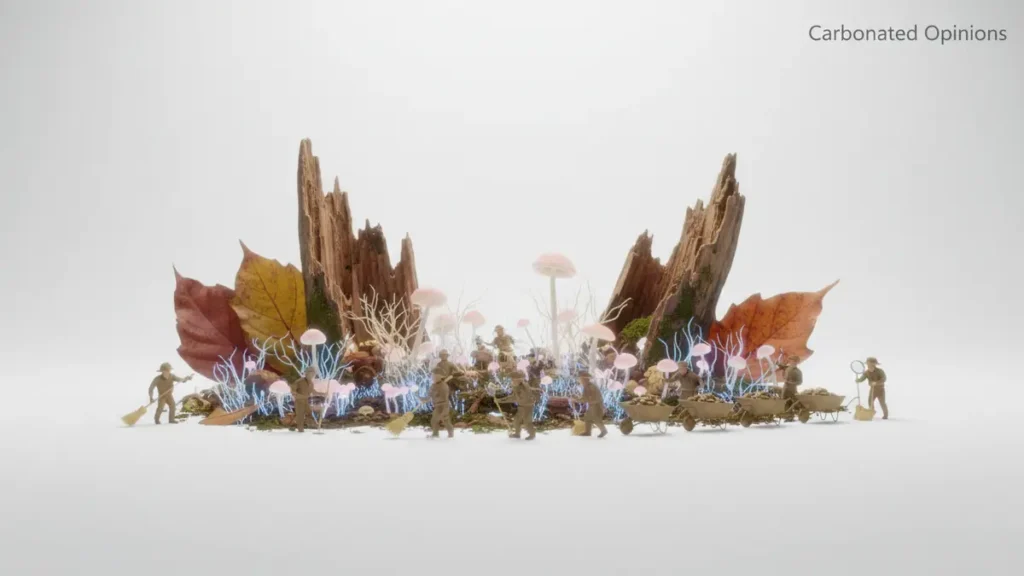
What Do Fungi Do In Nature? Mostly The Jobs You’d Never Put On Instagram
Fungi are Earth’s janitorial staff: underpaid, underpraised, and permanently splattered with something you’d rather not identify. If you’ve ever wondered what do fungi do in nature, the short answer is: they keep the living world from drowning in its own leftovers. The long answer is also that, but with enzymes, ecological nuance, and the occasional fungal crime spree. We’ll bust two myths while the spores settle: (1) fungi are “just mushrooms,” and (2) fungi will single-handedly save the climate, cure capitalism, and clean your kitchen grout. Spoiler: they’re more interesting—and less obedient—than that.
More Than Mushrooms: Meet The Hidden Majority
Calling all fungi “mushrooms” is like calling all internet content “memes.” Technically you’re gesturing at something real, but you’ve missed the infrastructure, the boring-but-essential bits, and the parts quietly shaping society while you argue in the comments. Mushrooms are just the fruiting bodies—nature’s temporary billboards that say, “Hello, I’m here to reproduce,” before collapsing into goo like a celebrity marriage. The real fungal bulk is often invisible: mycelium, a sprawling network of threadlike hyphae that runs through soil, wood, leaf litter, and the emotional underlayer of every forest walk. And fungi aren’t only forest-floor mystics. They include:
- Yeasts, which make bread rise and humans think they can sing karaoke.
- Molds, which decompose food with the punctuality of a landlord collecting rent.
- Endophytes, living inside plants like tiny tenants who (sometimes) pay in improved stress tolerance.
Mycelium is the forest’s Wi‑Fi—mostly invisible, connecting everyone, and mysteriously slow when you most need it. In fact, entire forests can be linked through what scientists call a common mycorrhizal network — sometimes nicknamed the wood wide web — where trees exchange nutrients and chemical signals underground.
Nature’s Chemical Engineers: How Fungi Recycle The Tough Stuff
If bacteria are the quick-and-chatty recyclers, fungi are the ones who show up with welding goggles and a PhD in slow chemistry. Their specialty is dismantling the tough stuff: cellulose and lignin, the molecular equivalents of “do not bend, do not fold, do not attempt.” Many fungi are saprotrophs—organisms that feed on dead organic matter by secreting enzymes that break complex materials into bite-sized nutrients. This is decomposition as external digestion: fungi basically marinate old leaves and fallen trees until the nutrients surrender. Why it matters: decomposition is a major driver of nutrient cycling and carbon turnover. Without fungi, forests would become ornate museums of undecayed wood, and soils would lose the steady trickle of nutrients that keeps plants growing. Fungi don’t “destroy” carbon; they move it through the system—some released back as CO₂, some stabilized in soils, some reincorporated into new life. It’s less superhero movie, more municipal budgeting: messy, essential, and never quite done. So, what do fungi do in nature here? They run the planet’s slow-motion cleanup crew, converting biological grit into usable currency for the next generation.
Not Always Nice: When Fungi Go Rogue
It’s tempting to cast fungi as the wholesome recyclers of the natural world—quiet, hardworking, and tragically overlooked. Unfortunately, fungi did not sign your inspirational poster. Some fungi are pathogens, and they can be devastating. Plant diseases can wipe out crops and forests; fungal infections can hit wildlife hard (amphibians have had a rough time); and humans with weakened immune systems can face serious illness. Fungi are also masters of opportunism: give them a stressed host, the right temperature, or a disturbed ecosystem, and they’ll take the opening like it’s a Black Friday doorbuster. The point isn’t that fungi are “bad.” It’s that ecosystems aren’t morality plays. Fungi occupy roles—decomposer, mutualist, parasite—sometimes all within the same extended family dinner. Nature isn’t trying to be kind; it’s trying to persist.
Mycelium Hype Vs. Real Climate Tools
Now for the modern myth: the idea that fungi—particularly mycelium—will swoop in and solve climate change if we just believe hard enough and buy enough mushroom leather. Yes, fungi are promising in climate-related work. Mycoremediation—using fungi to help break down pollutants—can be effective in certain settings, especially for specific contaminants and carefully managed sites. “Can be effective,” however, is science-speak for “please stop selling it like a miracle braid you saw in an airport kiosk.” And carbon? Fungi can influence how much carbon stays in soils through decomposition dynamics and interactions with plants. But soil carbon storage depends on a tangle of variables: soil type, climate, land management, microbial communities, and time. Time being the one we’re currently spending like it’s an unlimited streaming subscription. In sustainable agriculture, fungi matter a lot—think soil structure, nutrient availability, and symbiotic relationships that can reduce fertilizer dependence. But swapping industrial farming for “just add mushrooms” is like trying to fix city traffic with one more bike lane and a prayer. A better strategy is practical: diversify crops, protect soil, reduce tillage where appropriate, and support research that tests fungal tools in real fields, not just in vibes. Meanwhile, fungi-based biodegradable materials are genuinely exciting. They can reduce reliance on petro-plastics in some applications. But “biodegradable” isn’t a magic word; it’s a contract with reality. If the local waste system can’t compost it properly, your eco-packaging may live a long, comfortable life in a landfill, watching the centuries go by like a bored immortal.
Take-Away
Respect fungi as indispensable recyclers and ecological power brokers—not as cute little mushrooms, and not as climate messiahs. They’re more like competent civil servants: doing vital work, occasionally causing paperwork disasters, and rarely receiving the budget they deserve. Here’s the grown-up version of fungal enthusiasm:
- Appreciate that what do fungi do in nature is mostly decomposition, nutrient cycling, and ecosystem plumbing.
- Be skeptical of headlines that promise mycelium will solve everything from oil spills to existential dread.
- Support grounded field research, habitat conservation, and local fungal ecology projects.
Call to action: compost responsibly (no, not your phone), keep soil healthy, and read one reputable paper before sharing the next “mushrooms will save us” prophecy. Fungi are amazing. They just don’t do miracles on command—unlike your aunt’s essential oils, which also don’t.