
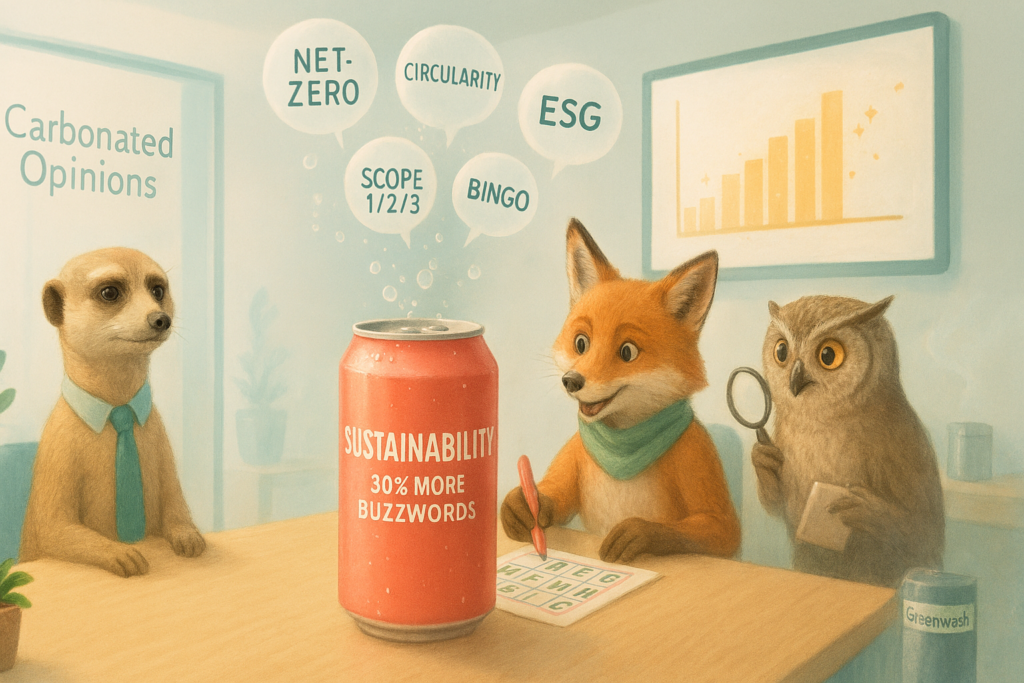
You walk into a meeting and the air smells faintly of eucalyptus and corporate optimism. Someone says “Sustainability” and everyone nods like they’ve heard the secret password. But is the word doing work — or is it just glitter on top of the same old soda? Part pep talk, part roast, this is your friendly guide to the language of climate action: when it helps, when it hides the mess, and what to ask instead of applauding the slogan.
Buzzword Bingo: What Are We Even Saying?
Words matter. They also multiply. “Sustainability” started sensible and quickly enrolled a whole family of buzzwords: net-zero, circularity, ESG, scope 1/2/3. Some are useful; some are fluff. If you want the long‑form history, read the Wikipedia page on Sustainability. Short version: the concept aims at balancing environment, economy, and society over time. The marketing version aims at good press photos.
Think of buzzwords like carbonation. A little sparkle makes things pleasant. Too much and you have a sugary mess that looks fun but won’t keep you alive.
Greenwashing: When “Sustainable” Means “We Bought a Plant”
If buzzwords are the scented candle, greenwashing is the air freshener sprayed over a mold problem. Greenwashing is the practice of dressing ordinary or even harmful actions in green language. It works because most people want to believe we can shop our way out of a warming planet.
There are telltale signs: vague claims, future promises without plans, spotlighting a tiny win while ignoring the rest. The concept has its own entry on Greenwashing, if you want to see the taxonomy of spin. The harm? It erodes trust and delays real change. Consumer confidence sinks, while real solutions get tangled in PR.
Metrics and KPIs: Measuring Virtue or Vanity?
Numbers are great. They let us compare, track progress, and reward improvement. They also let people build shiny dashboards that look impressively busy while actual emissions keep climbing. KPIs without context are like a pedometer for moral virtue: satisfying, but not a full workout.
Watch for cherry-picked metrics, changing baselines, and metrics that are impossible to verify. Ask for auditable data and independent verification. If a KPI is useful, it should be clear how it links to tangible outcomes, not just to a press release.
Real Fixes, Short of Rebranding the Planet
Okay, enough cynicism. There are real, concrete fixes that go beyond slogans. Designing products to last longer. Changing supply chains so materials actually get reused. Shifting from ownership to service models where appropriate. These are the nuts-and-bolts moves behind the idea of a Circular economy: keep materials in use, design out waste, and regenerate systems.
Real fixes are usually boring. They involve better materials, tighter logistics, and boring-but-crucial policy. They also reduce emissions and waste. Spoiler: you don’t need a slogan to fix a leaky pipeline.
The Language Shift: What To Ask Instead of Believing the Buzz
When someone uses a headline word, respond like a detective, not a fan. Ask short, direct questions: What exactly do you mean? By when? How will it be measured and verified? Who is responsible if it fails? What trade-offs are you making?
If a claim doesn’t come with numbers, timelines, and independent checks, treat it as marketing. Your skepticism is not cynicism; it’s a tool. Use it.
Take-away
Skepticism makes sustainability stronger. Buzzwords can start conversations, but they must end in action. Ask simple questions. Demand clear numbers. Reward the boring, effective work. And yes, roll your eyes at the scented-candle versions of climate policy — but then call for the plumber.
Call to action: this week, ask one brand or local leader what their most concrete, verifiable milestone is. If they can’t answer plainly, keep asking. Consider it your civic duty — with a wink.