
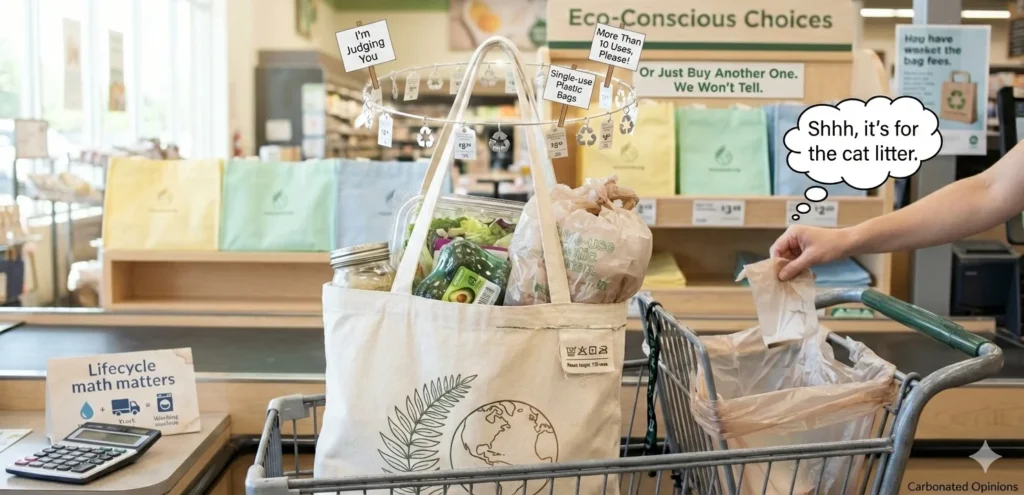
Reusable Bags Vs Plastic Bags: The Accessory That Wants A Halo
Reusable bags arrived like the eco‑world’s version of a festival wristband: trendy, vaguely meaningful, and destined to be rediscovered in a junk drawer next to expired takeout soy sauce packets. In the debate over reusable bags vs plastic bags, we’ve managed to turn a basic task—carrying groceries—into a personality test, a moral signal, and occasionally a small textile collection in the trunk.
The problem isn’t that reusable bags are “bad.” It’s that we treat them like absolution with handles. A bag is a tool, not a baptism.
The Great Bag Sell: How Reusables Became Green Theater
Once upon a time, the reusable bag was a sincere idea: stop producing so much single‑use stuff by, you know, not using it once. Then retail discovered it could sell you the solution to the problem it helped create, and do it in three seasonal colorways.
Stores turned bags into branding, loyalty nudges, and profit centers. The tote became merch. The slogan became the product. “Eco” prints—ferns, whales, a tasteful line‑drawing of the Earth looking emotionally available—sell better than environmental outcomes, because outcomes don’t photograph well under fluorescent lighting.
And the genius move: the bag is both purchase and proof. You buy it at checkout and immediately feel like the kind of person who owns compostable feelings. Meanwhile, the store gets margin, marketing, and a customer who’s less likely to ask why everything inside the bag is wrapped in three layers of plastic like it’s going on a deep‑sea expedition.
The Awkward Truth About Footprints: Production, Laundering, And Break‑Even Math
Think of a bag’s carbon footprint like a roommate’s unpaid utilities—it looks fine until you read the bill. What matters isn’t the vibe of “reusable”; it’s the life‑cycle math: materials, manufacturing energy, transport, and how many times you actually reuse it before it becomes a sad closet artifact.
Different bags come with different environmental IOUs:
| Bag type | The promise | The catch (a.k.a. the bill) |
|---|---|---|
| Thin single‑use plastic | Lightweight, low material use | Litter, wildlife harm, fossil feedstock, low collection rates |
| Paper | Feels virtuous, crinkles like accountability | Often higher production energy and water; bulky to transport |
| Woven polypropylene | Durable, light | Must be reused many times; still plastic if treated like a collectible |
| Cotton tote | Instagram’s favorite | Resource‑heavy to make; needs a lot of uses to break even |
Here’s the part that ruins the montage: some reusable bags need dozens of uses—sometimes far more—to outperform single‑use plastic on climate metrics, especially if that plastic bag gets a second life as a trash liner. Which means the planet’s fate hinges on you remembering a bag at least as reliably as you remember your phone.
Also: laundering. If you wash a cotton tote like it’s scrubbing away your consumer guilt, you’re adding energy, water, and detergent impacts. Hygiene matters, but so does not treating your bag like it’s training for a medical drama.
So when people ask are reusable bags better for the environment, the honest answer is: they can be, but only if you commit to a long‑term relationship. Not a one‑night stand you leave on the kitchen chair.
Greenwashing By The Seam: Corporate Tricks And Moral Wrangling
Corporate sustainability loves a reusable bag because it’s the rare initiative that’s cheap, visible, and puts the labor on you. It’s like telling someone you’ve “reduced emissions” by handing them a pedometer.
Common greenwashing patterns show up right between the handles:
- Hidden trade‑offs: “Look, a reusable bag!” while the supply chain continues its fossil‑fueled interpretive dance.
- Vagueness: “Eco‑friendly” with no data, no life‑cycle disclosure, and the confidence of a perfume ad.
- Token gestures: A bag program becomes the headline while bigger impacts—shipping, packaging, overproduction—stay comfortably unexamined.
A reusable-bag campaign can double as a moral vending machine: insert $2.99, receive one unit of virtue, no further questions. It also nudges the conversation away from systemic fixes and into personal purity rituals, which is great for quarterly reports and terrible for physics.
If you want the formal taxonomy of this behavior, the concept is literally called greenwashing—a word that should come with a warning label and maybe a rinse cycle.
What Actually Helps: Policy, Design, And Smarter Habits
The good news: we’re not doomed to tote theater. There are practical moves that beat “buy another bag” as a strategy.
First, policy works. Fees and bans reduce single‑use consumption because they change defaults, not just moods. You can be distracted, tired, or morally ambiguous and still behave differently when the system nudges you with a small, consistent consequence.
Second, design and transparency. Durable bags with clear material info and expected reuse targets help people make decisions like adults rather than like raccoons selecting shiny objects.
Third, habit beats aspiration. The best bag is the one you already own and actually use. Treat it like keys: put it where you can’t leave without it. If your bag lives in the trunk “just in case,” congratulations—you’ve invented a museum exhibit.
If you’re looking for plastic bag alternatives, the hierarchy is boring but effective: reduce what you take, reuse what you have, and reserve new purchases for when old gear genuinely dies.
For the bag itself, it helps to remember what a reusable shopping bag is supposed to be: not a costume, but a durable object that pays off only through repetition.
Take-Away: A Bag Isn’t A Moral Talisman
In the grand matchup of reusable bags vs plastic bags, the winner isn’t a material—it’s follow‑through. Reusable bags aren’t holiness you can carry; they’re tools that work only when used honestly, often, and with fewer theatrical sighs.
Three tips, no incense required:
- Pick durability over vibes. Choose a bag you’ll keep using, not the one with the cutest endangered animal quote.
- Do the reuse math. If you’re buying a new “eco” bag every month, you’re collecting debt with nicer typography.
- Vote for policy. Bring your bag, yes—but also bring pressure for fees, bans, and producer responsibility so the system gets greener, not just the checkout lane.
Bring your bag. Bring your skepticism. And bring pressure to make the system actually greener—not just the marketing.