
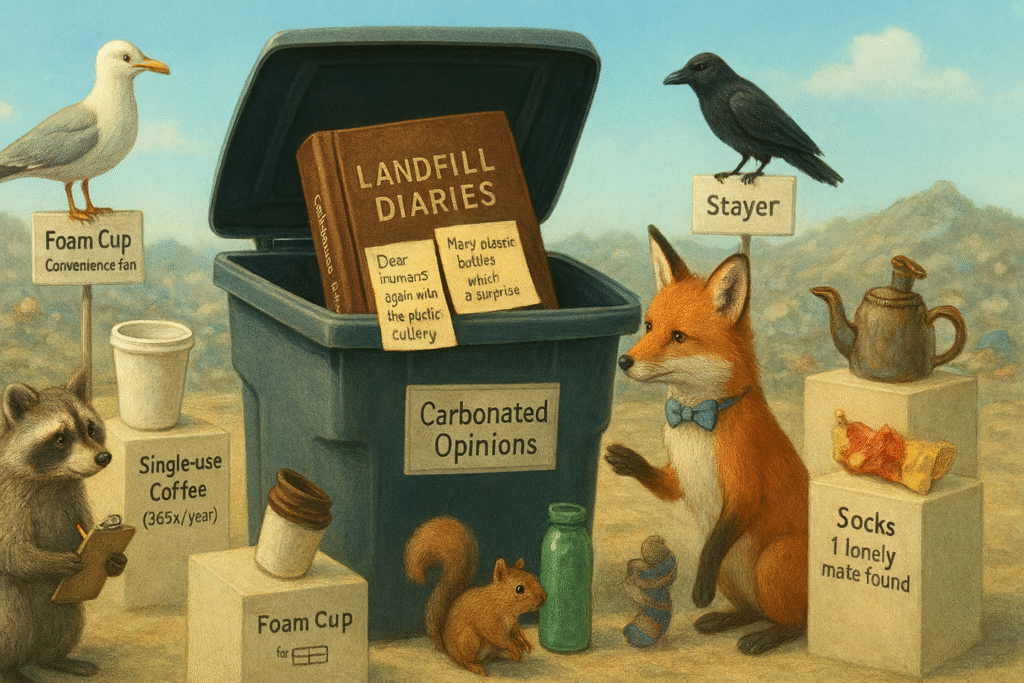
If landfill kept diaries, they would be full of passive-aggressive entries. “Dear humans, again with the plastic cutlery.” Imagine the gossip: socks without mates, foam cups in love with convenience, gadgets that died young. This is a gentle, funny walk through what the bin sees, why it matters, and little things you can do that actually help.
What the Bin Sees
The bin is a nosy witness. It sees leftover lunches, greasy pizza boxes, tangled cables, and a million snack wrappers. It sees broken chairs and kettles that were cheaper to replace than repair. Some items rot. Many do not. Plastic pollution lingers like an unwelcome guest who never leaves.
A landfill is like a museum of our bad habits — curated by convenience. The displays are not chic. They are loud, messy, and stubborn.
Why Landfills Are Not “Out of Sight, Out of Mind”
Throwing something away does not erase it. Food waste rots and makes methane. Methane warms the planet more than you might expect. Rain can wash chemicals from old trash into soil and streams. Valuable materials—metals, glass, some plastics—get buried and lost.
Think of one single-use coffee cup. One seems small. One person uses 365 in a year. Multiply by a city and you have a problem that stacks higher than a few polite conversations.
Small habits become big outcomes. The landfill keeps the score.
The False Comfort of “Recycling Will Fix It”
Recycling feels good to say at parties. But it is not perfect. Loads get contaminated—oil on a pizza box can ruin paper recycling. Some plastics are hard to recycle. Recycled material needs buyers. When systems and behavior don’t match, recycling stalls.
That does not mean recycling is useless. It means we should also reduce and reuse. Buy things that last. Pick items that can be repaired. Avoid products designed to be thrown away after one use.
If trash had a dating profile it would say: “Loves long-term commitment, not into breaking up.” It’s a jokey line. But it’s true: most trash sticks around.
Small Changes That Don’t Feel Like Heroic Sacrifice
You don’t need to become a zero-waste saint. Start small. Rinse containers before recycling. Carry a reusable cup and bottle. Wait 48 hours before buying something to see if you still want it. Fix a loose chair leg instead of replacing the whole chair. Visit a thrift shop or a repair café.
Try a seven-day bin diary. Note every item you throw away for one week. You will see simple swaps—reusables, repairs, smarter packing—that cut waste and save money. Share one swap in the comments or challenge a friend.
Take-away
Landfills are the patient, honest record of our daily choices. They do not judge; they log. Small, steady changes—better sorting, fewer single-use items, more repairs—add up over months and years. Perfection is not the point. Less repetition in our habits is. The planet will thank you for fewer exhibits in its museum of bad habits.