
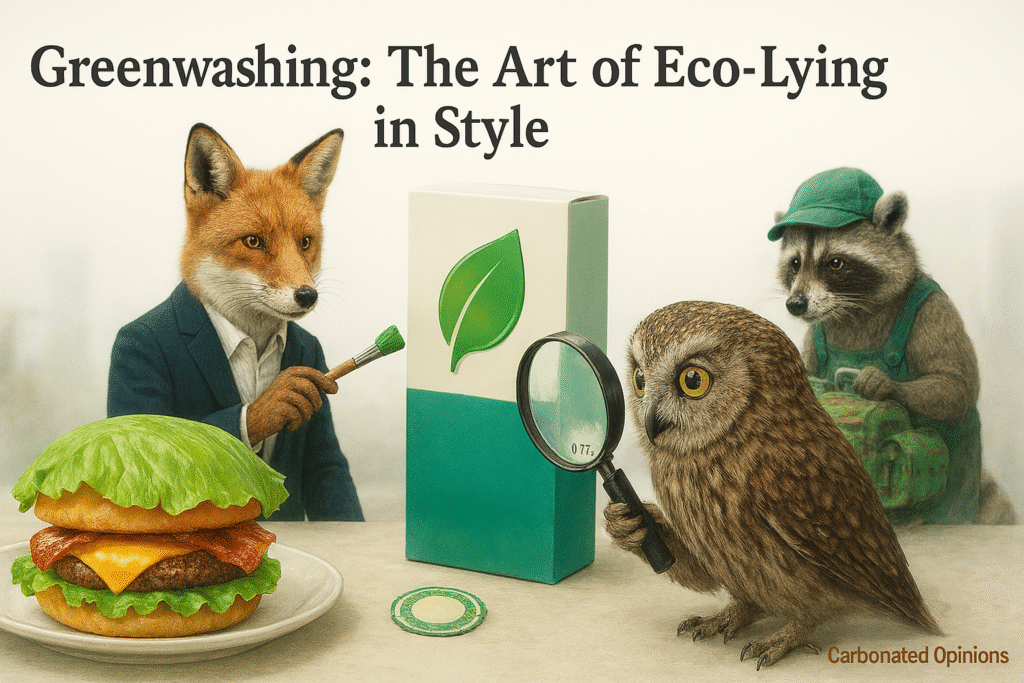
Quick thought: that shiny green logo on a product is not a virtue signal. It is marketing. Pretty pictures do not make a product sustainable.
What Is Greenwashing, Really?
Greenwashing is when a company looks greener than it actually is. It uses words, images, and badges to suggest real action. The truth may be much smaller or missing. Common tricks include vague phrases like “eco-friendly,” seals that sound official but mean little, and tiny improvements framed as big wins.
Classic Greenwashing Red Flags
Some signs are easy. Lots of green leaves on the label and no numbers is a red flag. A self-made badge with no source often means nothing. Claims without dates or data are suspicious. When a company highlights one tiny win but hides larger harms, that is smoke and mirrors.
Here’s a quick checklist you can use: look for clear numbers, find independent verification, check if the claim covers the whole product life, and ignore pretty pictures. It is like putting lettuce on a bacon cheeseburger and calling it a salad — it looks healthy but does not change the main problem.
Why Companies Do It — And Why It’s Worse Than Annoying
The motive is simple: it sells. People prefer greener products. Investors and regulators notice sustainability claims. So firms dress up their image to protect sales and calm critics.
Greenwashing is more than a minor annoyance. It misleads people who want to help. It shifts attention from deep fixes to easy PR wins. It can slow real change because policymakers and customers think problems are solved. In short, it buys companies time while serious harm continues.
How to Spot the Real from the Ridiculous — Smart Moves for Consumers
You don’t need a degree to see through most claims. Ask basic questions: who verified this? Is there a date or number? Is the claim about one ingredient or the whole product? Real commitments usually show data, targets, and a timeline.
Look for credible third-party labels and read what they actually measure. Beware of seals the company made up. Check for life-cycle thinking: does the product reduce harm from raw material to disposal, or only in one tiny step? Practical steps: read the small print, scan the company’s full sustainability report, and favor brands that publish data and admit limits.
Small System Fixes That Actually Help
Individual choices matter. But system change matters more. Clear rules that define what “green” means would cut down on fake claims. Standardized labels, stronger enforcement, and independent watchdogs all help.
Think of greenwashing as cosmetic surgery for corporate conscience — a paint job on an old engine. Better rules and checks force companies to fix the engine, not just repaint it.
Take-away
Pretty packaging is not progress. Ask for evidence. Prefer transparency over slogans. If many people demand proof, companies will spend less on spin and more on solutions.
Quick action: next time you see a bold green claim, look for the proof. Share a suspect ad with friends and ask: where’s the data?