
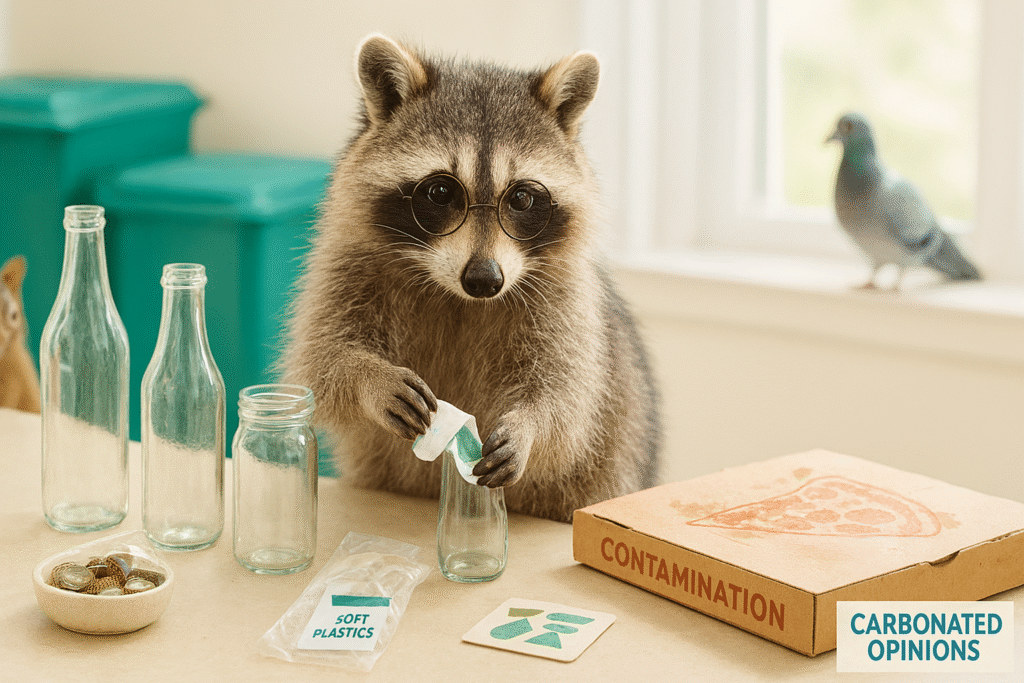
I used to think recycling was a personality trait. I still do. There is a special breed of person who rinses jars until they gleam, saves bottle caps like rare coins, and stares into a bin as if it might whisper secrets. Call us “recyclopaths.” We mean well. We get mad when people toss pizza boxes into the blue bin. We cheer when a clean yogurt pot makes it to the right pile.
The Rituals of a Recyclopath
Being a recyclopath is equal parts ceremony and habit. I line up bottles by size. I peel labels like a botanist. I even put soft plastics in a separate bag because they are the gremlins of the sorting line. It sounds ridiculous. It also feels good. Small care feels like power when the planet seems too big to fix.
I like to imagine my recycling routine as a raccoon with a PhD — obsessive, oddly elegant, and judged by the neighbors. Yes, I know—this image does not help my street cred. But it captures the mix of science, ritual and mild shame.
The Great Confusion: What’s Actually Recyclable?
Here is the rude truth: recycling rules are messy. One city takes your yogurt cups. The next city says, “Nope.” Paper with food stains can ruin a whole batch. Coffee cups are often lined with plastic. Juice cartons are a hybrid. And those multi-material snacks packs? The ones that look like confetti? Not recyclable in most places.
Contamination is the big enemy. A greasy pizza box can send an entire bale of paper to the landfill. A wet load of paper turns into mush that buyers do not want. So that tiny bit of food you left in a container matters more than you think.
When Recycling Feels Petty: System vs. Individual
We can be heroic at home and helpless in the system. Municipal rules differ. Markets for recycled materials go up and down. Some plastics have little demand, so they end up incinerated or landfilled. That makes the neat piles in your kitchen feel a bit… theatrical.
This is not a blame game. Individual habits matter. They cut waste and lower demand for virgin materials. But personal scrubbing will not fix weak recycling infrastructure or low market demand. Think of recycling as one arrow in a quiver — useful, but not the whole battle.
Practical Sanity Hacks (without losing dignity)
You can be both conscientious and sane. First, reduce: buy less, choose bulk instead of tiny packages. Second, reuse: bring a cup, carry a container, mend what you can. Third, learn your local rules. It takes five minutes and saves hours of worry.
Avoid things that ruin a load: greasy paper, tangled cords, soft plastics that clog machines. Compost food scraps if you can. If an item is clearly a mixed material (plastic glued to paper, or shiny film on cardboard), it probably does not belong in the bin.
Give up on perfection. Rinsing is good. Obsessive scrubbing is time you could spend calling a councilor about better recycling services. Vote and speak up for clearer labels and better collection.
Take-away
Being a recyclopath is not a bad thing. It shows you care. But caring without strategy can feel like using a bandage on a burst dam. Treating recycling as a magic wand is like trying to mop the ocean — noble, wet, and not enough.
Do a small, smart thing today: check one local guideline, sort smarter, or swap one disposable for a lasting item. Then, if you feel like it, tell your local council that your raccoon-with-a-PhD routine would be more useful if the system matched it.
Call-to-action: Look up one rule from your local recycling program today. Share one pet peeve or tip in the comments. Small changes add up, and loud, smart citizens get better service.