
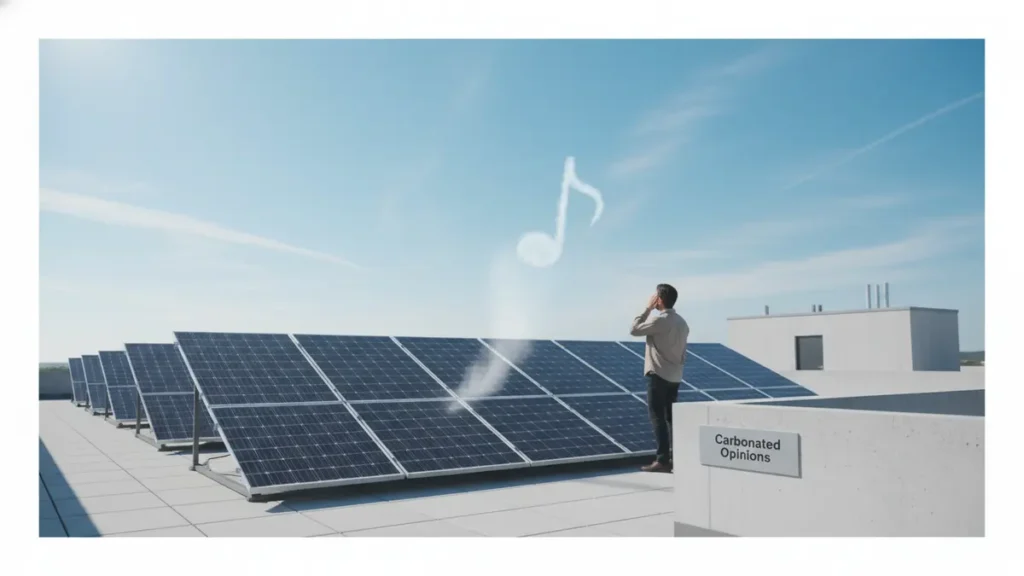
How Do Solar Panels Work When They Sound Like They’re Auditioning?
Solar panels don’t actually sing. They don’t harmonize, belt out ballads, or discover themselves in a dramatic bridge. But if you’ve ever stood under a rooftop array on a hot afternoon and heard a faint hum, tick, or sigh, you’ve met the part of modern life where how do solar panels work turns into “why is my roof whispering threats?”
This is the comedy corner of renewable energy: myths, mildly amusing physics, and the occasional creak that sounds like your house is plotting.
Not a Boy Band: What a Solar Panel Actually Is
A solar panel is less diva, more dependable introvert. It doesn’t harmonize, but it does something genuinely impressive in total silence: converting sunlight into electricity through the photovoltaic effect. Light hits semiconductor cells, charges get separated, and voilà—usable electricity. No applause track required.
Panels themselves are the strong, silent type. No moving parts, no vocal cords, no electrons rehearsing show tunes. If your system is “performing,” it’s usually the supporting cast—mounts, wiring, or inverter—doing improv.
The Usual Suspects: Why Panels Sometimes Make Noise
When your rooftop system makes sound, it’s not a haunting message from the Sun. It’s ordinary mechanical behavior—aka the universe’s most boring jump-scare.
- Thermal expansion (tick/creak): Frames expand in heat, contract in cool. Sunrise and sunset are basically the daily soundcheck.
- Mounting hardware vibration (rattle): Wind makes rails complain. Think percussion section, not paranormal activity.
- Inverter hum (steady buzz): Inverters sometimes hum under load. If it’s near the inverter, that’s your culprit.
- Wind flutter (kazoo effect): Certain gusts make edges vibrate. Your roof is not auditioning for a ska band.
- Birds and debris (random nonsense): Leaves, acorns, nesting material—nature’s way of trolling homeowners.
None of these are glamorous. All of them are more plausible than “my electrons are trying jazz.”
Electrons Aren’t Opera Singers
Let’s retire a few myths politely—but firmly, like escorting a guest out when they start explaining cryptocurrency.
- Myth: electrons sing. They don’t. They move silently.
- Myth: photons hum inside the glass. They deliver energy, not barbershop quartets.
- Myth: piezoelectric effects make panels buzz. True in lab toys, not in your rooftop array.
One of those solar energy facts worth embroidering on a pillow: when something sounds dramatic, it’s usually a bracket.
When to Worry (and When to Laugh It Off)
Some sounds are harmless “house settling with better PR.” Others are your system waving a red flag.
- Harmless: Ticks at sunrise/sunset, light inverter hum, wind noises that stop when the breeze does.
- Worth investigating: New rattling, sudden buzzing, or noises paired with performance drops.
- Call a pro immediately: Burning smells, smoke, loud crackling, or water near electrical parts.
Safety tip: don’t climb onto the roof for “just a quick look.” Gravity is undefeated, and your deductible is not a personality trait.
Take-away
Solar panels don’t sing; they complain like any appliance that lives outdoors and gets baked for fun. Listen carefully, fix what groans, laugh at the myths, and call a pro for anything that smells like electronics. And if your panels start a chorus, it’s probably the inverter—unless your roof is secretly auditioning for Broadway.
Heard your house say something truly unhinged—solar-related or otherwise? Drop it in the comments. Subscribe to Carbonated Opinions for more myth-busting with a smirk, because reality is already weird enough without adding rooftop opera.