
Daily Dose: Climate History, One Line at a Time
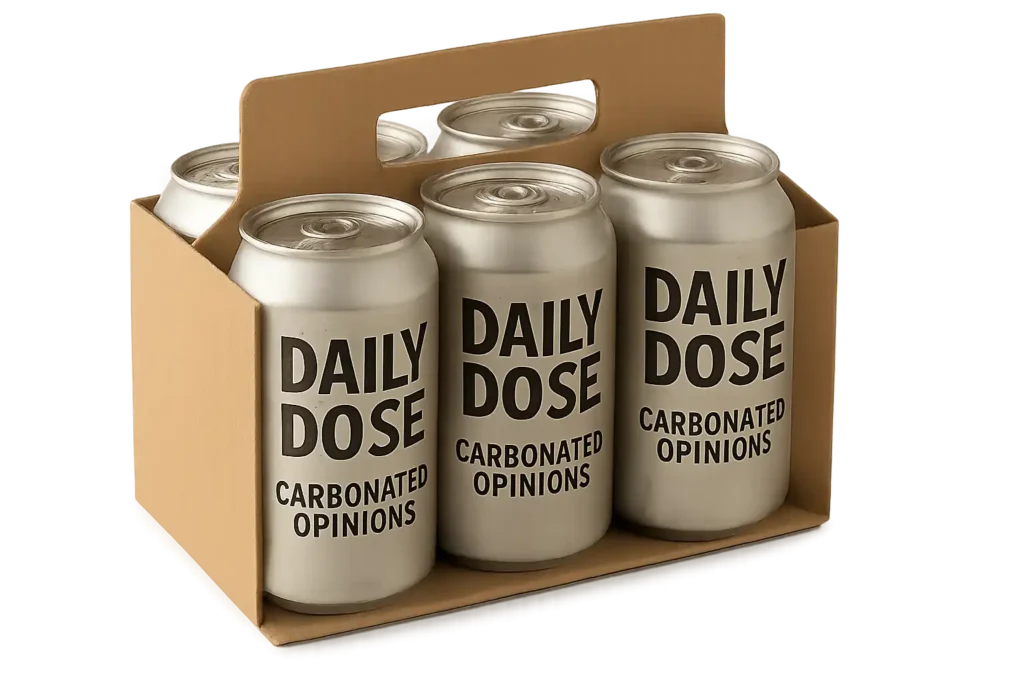
One day. One historical moment. One short line that didn’t age well.
Daily Dose is a calendar-based collection of tweet-sized climate facts, quotes, and observations — sometimes serious, often absurd, always real.
Policy promises, corporate confidence, scientific warnings, and the occasional spectacular miss, served without the benefit of hindsight… except that’s exactly the point.
Scroll by date, not importance. History doesn’t shout here — it mutters, shrugs, and occasionally faceplants.
Featured Quote
“Solar panels in a cloudy week feel like hiring a motivational speaker to do your chores: tons of optimism, zero output, and somehow the bill still arrives on time.”
Previously on “Daily Dose”
2026 (301)
October
“We designed products to become obsolete, then designed recycling systems to become complicated.”
When products are engineered for short lives, recycling becomes the respectable-looking clean-up operation. The real circular economy starts earlier: make things durable, repairable and worth keeping—not merely easier to discard.
“Our greatest environmental achievement may be discovering how many ways we can avoid the obvious.”
The cleverest excuses often arrive dressed as complexity. We commission studies, debate trade-offs and wait for perfect solutions, while the obvious one—consume less, waste less—stands patiently in the room.
“The planet doesn't need another campaign. It needs fewer contradictions.”
We love environmental campaigns because they let us feel useful without changing much. The harder work is making our habits, purchases and policies agree with our principles—less branding, more alignment.
“When a solution needs more excuses than evidence, it probably needs another solution.”
A promising solution should not require a small army of explanations to survive scrutiny. Excuses can keep a weak idea alive, but they cannot make it work. Evidence is the less glamorous—and more reliable—sales pitch.
“A sustainable lifestyle shouldn't require detective work to identify the greenest cereal box.”
When every eco-friendly purchase demands forensic analysis, the problem isn't consumer commitment; it's opaque systems. Sustainability should be built into products and policy, not outsourced to shoppers with magnifying glasses.
“We keep calling fossil fuels reliable because we haven't priced the consequences.”
Reliable is doing suspiciously heavy lifting here. Fossil fuels deliver steady energy partly because their damage is billed elsewhere—to public health, future generations and a climate that never gets a vote.
“The recycling bin is where good intentions go to meet bad infrastructure.”
We love treating recycling as a character test: good people sort, bad people don’t. But if collection is confusing, inconsistent or pointless, the real problem isn’t public virtue—it’s public infrastructure.
“Every climate loophole is a tiny door marked “future generations pay here.””
A loophole can make a balance sheet look cleaner while leaving the atmosphere—and the bill—untouched. The real trick is that later sounds like a date, when it often means someone else’s lifetime.
“We don't need to make nature profitable before deciding it's valuable.”
If nature must first pass a profitability test, we’ve confused a tool for measuring value with value itself. Forests, rivers and ecosystems support everything—including economies—without sending us an invoice.
“The trouble with infinite growth is that someone eventually discovers the edges.”
Growth is often treated as a virtue without an expiry date. But every market, planet and spreadsheet has boundaries; ignoring them doesn’t remove the limits—it merely ensures they arrive as a surprise.
“If the planet could unsubscribe from our economy, it probably would.”
The joke is that our economy treats the planet as an unlimited subscription: extract, consume, discard, repeat. But Earth is less like a service plan than a shared account—and eventually, someone gets locked out.
“We spent decades making waste cheap and now wonder why there is so much of it.”
We treat waste as an unfortunate by-product, but much of it is a business model working perfectly: make, discard, replace. Until disposal carries its real cost, reduce and reuse will remain swimming upstream.
“The cheapest environmental solution is rarely the one with the biggest marketing budget.”
Environmental progress is often sold with glossy campaigns, but the best answer may be quieter: less packaging, less energy, less waste. If the marketing is loud, ask whether the solution is doing enough—or merely being seen.
“A climate target without a plan is just optimism wearing a tie.”
A target is the easy part: it fits neatly in a speech and looks respectable in a report. The hard part is building the policies, budgets and accountability that turn ambition into fewer emissions—and keep it from becoming corporate decoration.
“A climate target without a plan is just optimism wearing a tie.”
A target is the easy part: it fits neatly in a speech and looks respectable in a report. The hard part is building the policies, budgets and accountability that turn ambition into fewer emissions—and keep it from becoming corporate decoration.
“We made the planet warmer and called the forecast unpredictable.”
We often treat climate uncertainty as a reason to shrug, but it is also evidence of intervention: once we alter the system, surprise becomes part of the bill. The forecast is messy because we made it so.
“The ultimate climate technology is one humanity has used for thousands of years: restraint.”
We keep looking for a machine that will save us from our appetites. But the harder breakthrough is cultural: deciding that more isn’t always better—and that progress sometimes means knowing when to stop.
“We don't have to save the planet. We have to stop making it harder for itself.”
The planet will likely survive us in some form; the question is whether we make it hospitable to us. Environmental responsibility is less about rescuing Earth than retiring our talent for making life needlessly difficult.
“A greener tomorrow is remarkably difficult to build with yesterday's excuses.”
Environmental progress rarely fails for lack of slogans; it fails when old excuses keep making today’s decisions. A greener future demands new habits, braver policies and the uncomfortable admission that convenience has a carbon footprint.
“The circular economy begins when “throw it away” stops being an acceptable ending.”
The real shift is not finding a greener bin; it is redesigning products, habits and business models so waste becomes a temporary condition—not the inevitable final chapter. Away has always been a place, not a solution.
“We can measure carbon down to the gram, yet still struggle to measure political courage.”
We’ve built exquisite tools for counting emissions, but far less reliable ones for counting the courage required to cut them. The gap isn’t technical; it’s political—and no dashboard can hide that forever.
“Every tonne of carbon has a history. Unfortunately, it doesn't come with a return policy.”
The joke lands because carbon is treated like a purchase we can undo. But emissions are more like a permanent entry on the planet’s ledger: the benefits may be brief, while the consequences keep collecting interest.
“Climate action shouldn't be revolutionary. It should be boringly inevitable.”
Revolutions make great headlines, but climate progress needs reliable habits: cleaner systems, smarter rules and fewer excuses. The goal isn’t dramatic virtue; it’s a world where the sustainable choice is simply the default.
“We invented planned obsolescence and then called durability old-fashioned.”
The oddity isn’t that products wear out; it’s that we made lasting things seem backward. When replacement drives profit, durability becomes a threat—not a virtue. Progress, apparently, now comes with a shorter warranty.
“Nature doesn't issue press releases. It just changes the conditions.”
Nature doesn't need a communications strategy; its changes arrive as altered coastlines, failed harvests and unfamiliar seasons. The real danger is not that conditions shift, but that we keep waiting for an announcement.
September
“Somewhere between “business as usual” and “too late” lies a very expensive lesson.”
Most expensive lessons begin quietly: a warning gets labelled inconvenient, a delay becomes normal, and routine outruns judgment. By the time the consequences are obvious, business as usual has become the bill.
“We celebrate efficiency while quietly increasing the size of the problem.”
Efficiency is often judged by how little effort a task requires, not by whether the task deserves doing. Streamlining a bad system merely helps it produce bigger problems, faster—and with excellent metrics.
“The greenest revolution might be discovering that we already own enough stuff.”
Sustainability is often sold as a shopping opportunity: newer, cleaner, greener. But the more radical move may be refusing the next purchase—and discovering that enough was hiding in plain sight.
“If your climate plan depends on everyone behaving perfectly, it's probably a fantasy.”
A workable climate plan survives imperfect choices: missed trains, warm homes, inconvenient truths and all. Designing for ideal behaviour is less a strategy than a polite way to avoid designing for reality.
“We made pollution invisible, then decided it wasn't really there.”
Modern pollution often arrives without smoke, smell or spectacle—just asthma, poisoned soil and altered climates. Make the damage invisible, and denial becomes convenient; the bill still arrives, merely addressed to someone else.
“The carbon footprint of an excuse is surprisingly difficult to offset.”
An excuse can feel like a harmless puff of smoke, but repeated often it creates a climate of inaction. No carbon credit can erase the cost of postponing what we already know needs doing—or the habit it builds.
“We keep waiting for a perfect solution while imperfect consequences pile up.”
The fantasy of a perfect solution is often just procrastination in formalwear. Meanwhile, reality keeps charging interest. A workable decision made today may leave fewer scars than a flawless one made too late.
“A sustainable economy shouldn't need the adjective forever.”
Calling an economy sustainable should eventually sound as redundant as calling water wet. If the adjective remains necessary, it may be less a sign of progress than evidence that the system still defaults to damage.
“The planet has excellent memory. Unfortunately, so do ice cores.”
The past isn't safely past when it is preserved in layers of ice. Ice cores turn ancient air into evidence, making climate change less a matter of opinion than a long-running case file—one we keep adding to.
“Nothing is truly disposable. It is merely someone else’s problem later.”
Disposable is often just a polite word for displaced. The bin, landfill or export market turns our convenience into someone else’s burden. Nothing disappears; it merely leaves our line of sight—and our sense of responsibility.
“We gave the future a seat at the table, then charged it for the meal.”
The joke is that we call this planning. By borrowing from people who cannot vote, complain or send the bill back, we turn convenience into a debt—and label the interest economic growth for now.
“The good news about fixing the climate is that physics has already told us what works. The awkward part is doing it.”
Climate action isn’t a puzzle waiting for a breakthrough; it’s a test of priorities. The science has done its part. Now comes the awkward business of changing systems, habits and profits that benefit from delay.
“We turned “growth” into a religion and “limits” into a swear word.”
We praise expansion as if bigger were automatically better, then act surprised when the costs arrive. Limits aren't enemies of ambition; they're the boundary conditions that keep ambition from becoming self-destruction.
“Climate action is rarely blocked by a lack of ideas. Mostly, it gets stuck in the waiting room.”
The climate crisis isn’t suffering from an imagination shortage; it’s suffering from institutional hesitation. Every delayed decision quietly turns a workable solution into a more expensive emergency—and good intentions are not a timetable.
“Every disposable product has a surprisingly permanent afterlife.”
We treat single-use items as if they vanish at checkout, but disposal is really a change of address. The brief convenience is ours; the long, messy afterlife is shared with ecosystems, communities and future generations.
“The planet doesn't distinguish between a genuine solution and a very convincing brochure.”
Environmental claims are easy to package, especially when the packaging is green. But ecosystems respond to emissions, extraction and waste—not clever language. Progress begins when the results can survive scrutiny without the brochure.
“Sometimes the most disruptive technology is simply using less.”
The tech world tends to equate progress with more: more data, devices, automation, subscriptions. But subtraction can be revolutionary too. Remove a dependency, a step or a needless demand, and the old system suddenly looks fragile.
“We don't need another climate slogan. We need fewer climate loopholes.”
The climate debate rarely suffers from a shortage of worthy words. It suffers when policy leaves convenient escape hatches for polluters. Progress begins where the loopholes end—and accountability becomes harder to avoid.
“The greenest promise is the one backed by a budget.”
Targets and pledges are cheap enough to multiply. A budget forces priorities, trade-offs and accountability—the unglamorous machinery that turns environmental virtue from a press release into something measurable.
“Sustainability becomes complicated remarkably quickly when someone has to pay for it.”
We’re often enthusiastic about sustainable choices until they cost more, take longer or inconvenience us. That isn’t hypocrisy so much as the central challenge: values become real only when they compete with comfort and price.
“We built cities for cars, then spent billions trying to make them pleasant for people.”
The irony of car-first planning is that it treats people as obstacles to movement, then funds parks, promenades and pedestrian zones to repair the damage. Sometimes the smartest urban upgrade is simply changing the priority.
“Tomorrow's technology is doing a lot of heavy lifting for today's inaction.”
We love imagining technology as a future rescue team because it lets us postpone difficult choices today. But invention is not a substitute for action; tomorrow’s tools still depend on someone starting the work now.
“If recycling requires a PhD to understand, perhaps the packaging has failed.”
Recycling is often framed as a test of public responsibility, but confusing labels shift the burden upstream. If people need expert guidance to sort the bin, the package—not the person—needs redesigning.
“The environmental cost of convenience is rarely included at checkout.”
We’ve made convenience brilliantly visible and its consequences almost invisible. The delivery, disposable packaging and instant replacement feel like small luxuries—until the planet receives the cumulative invoice.
“We call resources “natural” right up until we run out of them.”
Calling something natural can make exploitation sound inevitable—and costless. The label quietly hides the limits and consequences involved. We tend to recognise a resource’s value most clearly when scarcity sends the invoice.
“A carbon-neutral claim can hide a remarkably carbon-heavy story.”
Carbon neutrality is sometimes less a destination than a carefully designed spreadsheet. The label may reflect real progress—or simply emissions moved elsewhere, balanced on paper and marketed as virtue. Follow the carbon, not the claim.
“The planet isn't sending warnings anymore. It's sending examples.”
A warning invites debate about whether danger is coming. An example removes that comfort: floods, fires and heatwaves are evidence already on the record. The question is no longer whether it will happen, but how much more we will accept.
“We didn't run out of solutions. We ran into inconvenient economics.”
The frustrating part is that innovation often loses to arithmetic: the fix exists, but it costs too much, disrupts too many comfortable interests, or rewards someone other than the person footing the bill. Scarcity is political.
“Nothing says sustainable like replacing something perfectly good because the new version is greener.”
The awkward truth of eco-consumerism: a greener replacement is not automatically a greener choice. If the old thing still works, the most sustainable upgrade may be resisting the urge to upgrade at all.
“Climate promises are easy to make when the atmosphere isn't invited to the meeting.”
A promise made in a room can feel like progress, especially when everyone applauds. But the atmosphere keeps no minutes and accepts no spin; it responds only to emissions, action and the inconvenient passage of time.
August
“We keep redesigning the future while refusing to renovate the present.”
Grand visions are appealing because they let us feel progressive without disturbing our routines. But the future is built from today’s neglected details: broken systems, stale habits and problems waiting for someone to stop admiring the blueprint.
“The greatest renewable resource is human ingenuity—provided we point it in the right direction.”
Human ingenuity can solve astonishing problems—and create expensive new ones. The scarce resource isn’t cleverness; it’s judgment: deciding which problems matter, and whether our solutions leave the world better than they found it.
“The environment rarely asks for perfection. It asks us to stop making the same mistakes.”
Perfection is a demanding excuse: it makes improvement feel impossible before we begin. Real responsibility is less glamorous—notice what went wrong, change the pattern, and let progress be measured by fewer repeats.
“Every generation believes it has more time than it actually does.”
The illusion isn’t that time moves quickly; it’s that consequences don’t. Each generation postpones what matters, assuming tomorrow will be generous. Then tomorrow arrives—and presents the bill for all that waiting.
“Clean technology still depends on dirty decisions.”
Clean technology doesn’t erase environmental damage; it relocates and redistributes it. The real test is not whether a product looks green, but whether we’re honest about the mines, workers and compromises behind it.
“The first casualty of every environmental crisis is the illusion that someone else will fix it.”
Environmental crises are often treated like bad weather: unfortunate, distant and somebody else’s problem. Then the consequences arrive at our doorstep, reminding us that shared systems come with shared responsibility—and no customer service desk.
“The easiest promises are always the ones due after someone else leaves office.”
Political promises become cheapest when accountability has an expiry date. If the deadline arrives after the promise-maker has gone, ambition costs nothing—and voters are left auditing a ghost with no receipt.
“An economy that ignores nature is living off borrowed capital.”
An economy can report impressive growth while quietly liquidating the systems that make growth possible. Forests, soils and stable climates are not scenery; they’re assets. Ignore their depreciation, and prosperity becomes debt.
“The planet has remarkable resilience. Our timelines are less forgiving.”
Nature can absorb astonishing damage and still find a way forward. Humans are less adaptable to consequences that arrive slowly, unevenly and after the people who caused them have moved on to the next crisis.
“We don't inherit sustainability—we practice it.”
A sustainable future won’t arrive as an inheritance from wiser generations. It’s built through ordinary choices—how we travel, consume and vote—repeated until responsibility becomes habit rather than aspiration.
“Every innovation solves one problem and introduces another. Wisdom is choosing which trade-off to accept.”
Every breakthrough moves the difficulty somewhere else: convenience may cost privacy, speed may cost resilience, efficiency may cost jobs. Wisdom isn’t demanding perfection; it’s deciding which price is worth paying.
“The most expensive energy is the energy that fuels tomorrow's disasters”
Energy is never truly cheap when its waste is handed to the future. A bargain built on pollution and climate risk merely shifts the bill—usually to people who had no say in the purchase, and no share of the profit.
“The longer we delay the transition, the steeper the learning curve.”
Avoiding change rarely keeps life simple; it merely postpones the invoice. By the time transition becomes unavoidable, habits are rusted, options narrower and the learning curve looks less like a slope than a wall.
“Nature doesn't need a seat at the table. It owns the building.”
We talk about nature as if it were one interest group among many, invited in when convenient. But every economy, boardroom and lunch depends on it. Treating the foundation as a footnote is a remarkably expensive habit.
“Nature doesn't need a seat at the table. It owns the building.”
We talk about nature as if it were one interest group among many, invited in when convenient. But every economy, boardroom and lunch depends on it. Treating the foundation as a footnote is a remarkably expensive habit.
“Waste is simply a resource we've stopped respecting”
“Every climate solution starts as someone's unrealistic idea”
“A greener future isn't built by trends; it's built by habits”
“The biggest emissions often come from the smallest compromises”
“The biggest emissions often come from the smallest compromises”
“We mastered mass production long before we mastered mass responsibility”
“The atmosphere doesn't grade on effort—it records results.”
“Every environmental shortcut eventually finds the long way back.”
“The future won't ask what we intended. It will remember what we actually built.”
“It's remarkable how quickly "impossible" becomes "inevitable" once someone builds it”
“Progress is measured by what becomes normal, not by what makes headlines.”
“We often confuse being less harmful with being genuinely sustainable.”
“The biggest obstacle to change is believing someone else will change first.”
“A sustainable future is built by ordinary decisions repeated millions of times”
“Every landfill started with something someone thought was too useful to throw away.”
“Environmental problems rarely arrive overnight. Neither do real solutions”
“The planet has no reset button—only rewind lessons.”
“When we borrow from the future, interest is paid in extremes”
“Nature has remarkable patience. It just doesn't negotiate”
July
“The best time to reduce emissions was yesterday. The second best time is before the next election”
“Every "game-changing" technology eventually meets the laws of physics”
“The atmosphere has never accepted thoughts and prayers as legal tender”
“A bold vision without bold action is just well-designed wallpaper”
“The cleanest energy is still the energy we never had to waste”
“Climate change isn't speeding up. Our excuses are just running out”
“We call it "externalities" when the bill arrives somewhere else”
“The environment doesn't need saving. Our way of living does”
“Every generation inherits a planet. Ours also inherited the receipt”
“Human progress is remarkable. So is human procrastination”
“Some industries discuss sustainability the way casinos discuss moderation”
“The transition becomes harder every year we pretend it has already started”
“We extracted ancient sunlight and spent it like lottery winnings”
“Technology changes quickly. Infrastructure changes eventually”
“The cost of prevention always seems outrageous right before the cost of disaster arrives”
“We treat environmental collapse like bad weather instead of bad planning”
“Every climate conference produces enough hot air to power a small debate”
“Modern society runs on convenience and apologizes later”
“If efficiency alone solved consumption, email would have saved paper”
“The planet keeps providing data points. We keep calling them surprises”
“Net zero sounds impressive until you ask what happens before net”
“The most renewable resource in politics is postponement”
“A future powered by clean energy still needs cleaner habits”
“Sustainability reports are getting longer while attention spans get shorter”
“We’re trying to engineer our way out of problems engineered by optimism”
“Every “bridge fuel” somehow leads to another bridge”
“The atmosphere has become humanity’s least responsible group project”
“Climate policy is often the art of agreeing loudly and acting quietly”
“We planned for endless consumption and called the consequences unexpected”
“History may remember greenwashing as the last great fossil fuel industry”
“Progress is easy to announce and difficult to electrify”
June
“Every energy source sounds cleanest before scaling begins”
“The planet sends invoices in floods, droughts, and insurance premiums”
“A sustainable product in an unsustainable system is often just premium packaging”
“We don’t fear change nearly as much as we fear changing first”
“Climate denial didn’t disappear; it just learned financial vocabulary”
“The future keeps arriving earlier than our infrastructure plans expected”
“The atmosphere is now a historical archive of industrial decision-making”
“We built an economy that mistakes extraction for productivity”
“Most green technologies succeed the moment they stop being called green technologies”
“Civilizations rarely notice decline while the spreadsheets still look healthy”
“A carbon offset is often an apology wrapped in accounting terminology”
“The problem with climate deadlines is that physics actually enforces them”
“We celebrate recyclable packaging while shipping disposable lifestyles”
“Nature has no PR department, which is partly why it keeps losing arguments”
“The market adapts quickly — especially when avoiding responsibility is profitable”
“Every “temporary” fossil fuel solution arrives with permanent infrastructure”
“The climate debate ended years ago. What remains is a negotiation with consequences”
“Humanity treats the atmosphere like a free trial with no cancellation date”
“The transition will be affordable eventually. The delay never is”
“Efficiency saves energy — until we use the savings to consume more”
“Policy moves slowly until reality starts sending reminders”
“We invented disposable culture and then acted surprised when nothing lasted”
“The longer we wait, the more “innovation” becomes “damage control.””
“Resilience is what we call preparation we wish we’d started earlier”
“Resilience is what we call preparation we wish we’d started earlier”
“Climate ambition often peaks right before the budget meeting”
“If the pilot never lands, it’s not a test — it’s a delay”
“The easiest carbon to cut is the one in the press release”
“Growth without limits is a fairy tale with quarterly earnings”
“We don’t need smarter goals. We need fewer loopholes”
“When everything is a priority, emissions win by default”
May
“The future isn’t uncertain — it’s just politically inconvenient”
“A roadmap without funding is just motivational speaking”
“If it’s cheaper to waste, waste becomes policy”
“Climate change is the ultimate long-term project managed quarter by quarter”
“Innovation is amazing. Unfortunately, physics still reviews the final draft”
“Every sustainability promise has a deadline hiding in small print”
“The planet doesn’t care about our targets — only our trajectories”
“We keep calling it the energy transition as if we’re calmly changing trains”
“Hope is not a strategy — but neither is pretending everything is under control”
“If the roadmap has no deadlines, it’s just a scenic route”
“Progress isn’t announced at conferences; it shows up in boring infrastructure”
“Circular economy: the art of admitting nothing should have been disposable”
“Every “later” in climate policy has a very real calendar date attached”
“The market loves disruption — unless it disrupts profits”
“Sustainability shouldn’t need a hero story. It should need a maintenance plan”
“A pilot project is often where big ideas go to retire quietly”
“Convenience is the most successful fossil fuel”
“We measure emissions in tonnes but denial in decades”
“If the solution fits neatly into a press release, it probably doesn’t fit the problem”
“Efficiency is wonderful — until it makes waste affordable”
“When the plan relies on future innovation, the present gets a free pass”
“Technology can move fast and break things. Climate change moves slow and breaks everything.”
“Every climate delay is a loan taken out against someone else’s childhood”
“The future is always “urgent” until it becomes “expensive.””
“Greenwashing is proof that reputation now emits more carbon than factories”
“If sustainability needs a marketing campaign, it probably isn’t”
“We don’t lack solutions — we lack the political courage to stop inventing excuses”
“Net zero without net honesty is just accounting with better lighting”
“We don’t welcome spring; we exploit it, turning pollination into supply chains”
“Spring breezes don’t carry hope; they carry smog diluted into optimism”
“Every tulip is a billboard, cultivated to remind us that nature can be branded”
“Spring festivals aren’t rituals of gratitude; they’re carbon footprints disguised as joy”
April
“The meadow doesn’t sing; it hums with machinery mowing down wildflowers for order”
“The meadow doesn’t sing; it hums with machinery mowing down wildflowers for order”
“Spring is not rebirth; it’s marketing season for “eco‑friendly” products wrapped in plastic”
“We don’t celebrate renewal; we schedule it, planting trees for press releases”
“Spring rains don’t cleanse; they rinse chemicals into rivers like seasonal confessions”
“Every cherry blossom is a photo op, proof that beauty can be commodified before it falls”
“Spring doesn’t bloom; it negotiates with pesticides, trading bees for profit margins”
“The atmosphere isn’t infinite; it’s a diary filling with every careless entry we make”
“We don’t eat food; we eat packaging with flavoring”
“Wildlife reserves are zoos with better marketing”
“We don’t build dams; we build prisons for rivers”
“The desert doesn’t expand naturally; it’s recruited by deforestation”
“Renewable energy is hope on a lease, still backed by fossil collateral”
“We don’t light cities; we blind the stars”
“The ocean doesn’t sing anymore; it coughs plastic lullabies”
“Every skyscraper is a middle finger to the horizon”
“We don’t harvest crops; we harvest chemicals, and call it agriculture”
“The ocean is a war zone, its reefs bombed daily by acid and heat”
“Greenwashing is propaganda, posters pasted over rubble to convince us the war is already won”
“Explosions are echoes in the atmosphere, each detonation a pulse of carbon added to the planet’s fever”
“Concrete is the language of empire, spoken in towers and freeways, translated into extinction”
“The atmosphere is not a dumping ground; it’s a mirror reflecting every choice we make”
“The earth doesn’t need saving; it needs us to stop pretending destruction is progress”
“Sustainability isn’t a lifestyle; it’s a survival strategy we keep treating as optional”
“We don’t plant trees for shade; we plant them for hashtags”
“Plastic isn’t waste; it’s immortality disguised as convenience”
“We don’t inherit the planet; we rent it short‑term and leave the deposit in landfills”
“Nature doesn’t negotiate — it simply sends the bill in floods, fires, and droughts”
“Concrete doesn’t age gracefully; it crumbles into dust that still refuses to return to the earth”
“We don’t pave paradise; we pour it, one truckload at a time”
“Concrete jungles aren’t cities; they’re monuments to our refusal to coexist with nature”
March
“Concrete doesn’t just cover the earth; it silences it, smothering soil until nothing grows but parking lots”
“The soil remembers every crater, storing toxins like unmarked graves beneath the surface”
“The rainforest is not vanishing; it’s being converted into receipts, one tree at a time”
“Fast fashion is the seasonal migration of vanity, leaving rivers dyed in its wake”
“Oil spills are the planet’s tattoos — permanent, regrettable, and always explained away”
“We don’t measure sustainability in forests saved; we measure it in hashtags posted”
“Warplanes don’t just target enemies; they redraw the map of biodiversity with every strike”
“Plastic bottles are time capsules, waiting patiently to be discovered by civilizations that outlast us”
“Plastic is the shrapnel of consumerism, scattered across beaches like silent landmines”
“Every oil rig is a fortress, every barrel a bullet fired at the climate”
“When forests burn under bombardment, the silence afterward is not peace — it’s extinction”
“Carbon neutrality is the art of balancing sins with paperwork”
“The battlefield doesn’t end at the blast zone; rivers downstream carry the war for generations”
“We don’t fight wars over land anymore; we fight wars with the land itself, and the casualties are forests”
“Climate conferences are costume parties where urgency dresses up as progress”
“Every explosion is a chemical cocktail, seeding the air with poisons that linger long after the smoke clears”
“Bombs don’t just fall on cities; they fall on ecosystems, scattering craters across the soil like scars on the planet’s skin”
“Every wind turbine spins hope, but the grid still hums with coal”
“Air conditioning hums a lullaby of comfort, while outside the planet sweats through the chorus”
“Oil rigs rise from the sea like cathedrals, worshipping addiction with steel and flame”
“We don’t inherit the earth from our ancestors; we lease it short‑term and leave the deposit in landfills”
“Carbon credits are indulgences sold by modern priests of pollution, absolution priced per ton”
“We don’t mine lithium; we mine optimism, carving hope out of someone else’s backyard”
“Greenwashing is the art of painting profit margins with biodegradable brushstrokes”
“The rainforest doesn’t fall silently — it’s logged into spreadsheets before the chainsaws arrive”
“Plastic is the fossil record of our convenience, layered in bright colors for future archaeologists”
“Every climate pledge is a bookmark in a book no one intends to finish”
“We don’t bury waste; we plant monuments to denial and call them landfills”
February
“Oil rigs aren’t monuments; they’re altars to addiction rising from the sea”
“Air conditioning isn’t comfort; it’s climate sabotage humming in every vent”
“Fast fashion isn’t style; it’s landfill couture”
“Climate pledges aren’t promises; they’re IOUs written to the future”
“Greenwashing isn’t progress; it’s lipstick on a smokestack”
“The landfill isn’t a grave; it’s a time capsule of everything we refused to change”
“Carbon offsets aren’t solutions; they’re permission slips for pollution”
“The rainforest isn’t a resource; it’s a library we’re burning without reading”
“Renewable energy isn’t a revolution; it’s optimism leased from fossil fuels”
“Plastic bags aren’t convenience; they’re souvenirs from our denial”
“Climate conferences aren’t action; they’re applause rehearsed for cameras while the planet burns backstage”
“The landfill isn’t full; it’s endlessly patient with our denial”
“Sustainability is progress rebranded, a buzzword stapled to press releases”
“Pipelines aren’t infrastructure; they’re veins feeding our fossil addiction”
“Carbon neutrality is balance by spreadsheet, morality outsourced to accountants”
“The ocean doesn’t choke on straws; it chokes on silence about oil”
“Green tech is optimism wired to lithium mines, salvation with a supply chain”
“The rainforest doesn’t vanish — it gets translated into furniture catalogs and profit sheets”
“Climate denial isn’t ignorance; it’s a profitable script written by lobbyists”
“The recycling logo is less a solution than a marketing halo, glowing faintly over mountains of plastic”
“Climate conferences aren’t action; they’re applause rehearsed for cameras.”
“The landfill isn’t full; it’s endlessly patient with our denial.”
“Sustainability isn’t progress; it’s a buzzword stapled to press releases.”
“Carbon neutrality isn’t balance; it’s accounting tricks dressed as morality.”
“The ocean isn’t drowning in straws; it’s drowning in silence about oil.”
“Green tech isn’t salvation; it’s optimism wired to lithium mines.”
“Climate denial isn’t ignorance; it’s a business model with lobbyists.”
“Climate conferences are theater, applause echoing while the planet burns backstage.”
January
“Electric cars are guilt on wheels, powered by batteries mined from someone else’s backyard.”
“The rainforest isn’t vanishing; it’s being itemized into furniture catalogs.”
“Carbon credits are indulgences for polluters, a modern church selling absolution by the ton.”
“Wind turbines spin optimism, while pipelines carve reality.”
“Compost piles aren’t revolutions; they’re polite gestures in a system built on waste.”
“Green marketing is camouflage, hiding profit margins behind leafy icons.”
“Solar panels are hope on rooftops, but coal still writes the power bills.”
“The recycling bin isn’t salvation; it’s a confession booth where plastic sins are whispered away.”
“Carbon footprints are blame outsourced, a clever trick to make consumers carry the weight of industry.”
“Air conditioning is comfort with collateral damage, cooling our rooms while heating the planet.”
“Oil spills are messes with a PR team, apologies floating on the tide while ecosystems drown.”
“Fast fashion is vanity stitched in polyester, insecurity sold by the season, rivers dyed for the runway.”
“Climate pledges are calendars in disguise, pushing urgency into a future where accountability expires.”
“Deforestation is emptiness landscaped, a profit margin disguised as progress.”
“Bottled water is thirst with a logo, proof that even necessity can be trademarked.”
“SUVs are freedom rebranded — freedom to consume, freedom to pollute, freedom to call excess a lifestyle.”
“Recycling didn’t invent guilt. It branded it green.”
“The landfill isn’t a graveyard; it’s a museum of everything society pretends to forget.”
“When corporations discovered guilt was profitable, they wrapped it in eco‑labels and sold it back to us.”
“Packaging didn’t invent litter. It professionalized it.”
“The recycling logo isn’t a solution; it’s a halo drawn on plastic.”
“I love climate‑friendly gardening: compost, rain barrels, the works. But the pests? They formed a union and demanded renewable energy subsidies—apparently even freeloaders want clean benefits.”
“Following energy efficiency trends: I now turn off lights like a ninja. But reusable cutlery? I’m clanking through meetings like a wind chime. Green innovation funding, invent stealth spoons.”
“Carbon-aware culture tip: if your green sports initiatives include composting, be ready. The fruit flies drafted themselves first overall and keep dive-bombing the postgame interview.”
“Youth climate movements are drafting Environmental stewardship legislation, and I’m drafting excuses. Reusable mop vs. extra effort: the only climate summit where my couch has veto power.”
“Carbon-smart logistics update: my coffee was ‘offset’ by planting a tree on a spreadsheet. In other greenwashing scandals news, I buy coffee anyway—because mornings don’t run on ethics.”
“Government pledges a climate‑aligned trade policy and I’m over here doing my part: taking a long shower to “stimulate the water economy,” then whispering “water conservation” to the drain.”
“I tried following a Sustainable consumption roadmap, but then corporate sustainability pledges offered ‘eco-friendly points’ for flying. Now my vacation is powered by jet fuel and carbon guilt—with a recyclable receipt.”
“Decarbonizing transport systems is easy: walk the gift to the party. Hard part? ESG investing guilt made me use eco wrapping paper that screams “IT’S SOCKS!” before I ring the bell.”
“I paid extra for resilient outdoor furniture, but the weather took it as a challenge. Responsible sourcing? Sure—my umbrella is now ethically relocated three neighborhoods over.”
““Carbon footprint awareness hit hard, so I switched to eco deodorant. Climate action is a national priority—apparently my armpits didn’t get the memo and declared independence.””
2025 (19)
December
“Community gardens taught me “grow where you’re planted.” My eco shoes taught me “stay where you’re planted.” Energy efficiency pledge complete: I shuffle at solar-powered snail speed.”
“Welcome to the green innovation hub, sponsored by carbon taxes: we’ve invented a new sport—grocery juggling. Plastic bag optional, shame mandatory, and the only prize is crushed bread.”
“Nothing says “progress” like a sustainable innovation pipeline that delivers eco paint in exactly two colors: “Mushroom” and “Other Mushroom.” Environmental regulations: saving the planet, one boring wall at a time.”
“Eco‑influencers: “Choose eco-friendly packaging!” Me: “Done.” Also me, at 2% battery: frantically Googling “nearest charger” while chewing the compostable mailer for emotional support.”
“My eco dish sponge fell apart so fast it should come in sustainable packaging: a goodbye note and a tiny urn. On the bright side, I’m supporting sustainable communities by buying replacements weekly.”
“Climate activism is buying a reusable coffee pod, then spending 14 minutes excavating wet espresso mud like an archaeologist. Environmental innovation: turning mornings into a tiny, fragrant landfill cleanup.”
“Solar panel breakthroughs are great, but my reusable food wrap leaves sticky residue like it’s trying to unionize with my leftovers. Eco‑responsible governance means choosing: clean air or clean Tupperware.”
“Sustainable mobility is me walking everywhere to “save the planet,” then collapsing onto a mattress built from pure petroleum and bad decisions—because the eco one costs a month of rent and my dignity.”
“Climate‑aligned fiscal policy sounds powerful at international climate summits—then my paper straw dissolves mid‑drink and I realize the real emissions are coming from my annoyed sighs.”
“Solar panels in a cloudy week feel like hiring a motivational speaker to do your chores: tons of optimism, zero output, and somehow the bill still arrives on time.”
“I support green partnerships with industry to fight extreme weather events. Also, I’m sipping from a reusable bottle that hasn’t been washed since last Tuesday. Call it carbon-neutral kombucha.”
“I support green partnerships with industry to fight extreme weather events. Also, I’m sipping from a reusable bottle that hasn’t been washed since last Tuesday. Call it carbon-neutral kombucha.”
“Green finance regulations: “Prove you’re sustainable.” My skillet: “Prove you can remove this lasagna.” Somewhere, a tree falls, and my sponge falls apart in solidarity.”
“Sustainable urban planning said “reduce emissions,” not “increase suspense.” I’m investing in renewable energy infrastructure while my eco detergent turns laundry day into a thrilling mystery: clean, or just wet?”
“I’m eco-driven now. I use a reusable lunchbox—except when it’s at work. Then I practice the ancient sustainable art of eating chips from my pockets and calling it “low packaging.””
“Eco‑friendly urban planning: “Use the laundry line, save the planet.” The rainstorm: “Love the vibe. I’ll recycle your clean clothes back into dirty.””
“My eco toothpaste vows to preserve coasts; all it preserves for me is a mysteriously fossilized aftertaste.”
“Our national climate resilience plan solves the nuclear debate by funding reactors, taxing eco bulbs, and mandating dim lighting.”
“Climate risk disclosures on the label, sustainability journey on the tag - these eco shoes promise comfort, recant.”