
You want a dinner party that people remember for the food, the laughs, and maybe the playlist. Not for a surprise environmental horror story. These eco-facts are tiny truth bombs — a little awkward, a little funny, and easy to act on. Consider them party etiquette for the planet.
The Invisible Guest — Food’s Hidden Water Bills
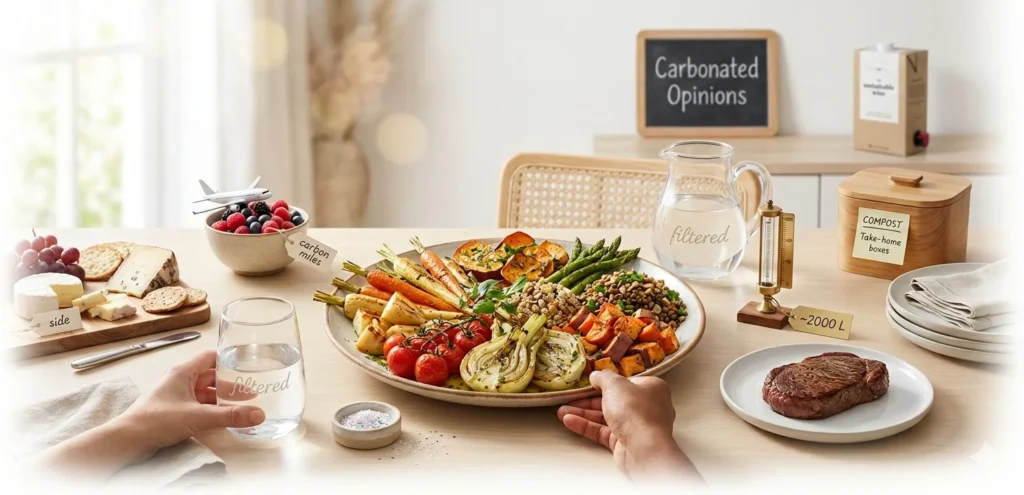
Some foods drink more water than you might expect. Beef and cheese top the list. When you count the water for growing feed, processing, and cleaning, a single steak can need thousands of liters. Almonds and some fruits are also thirsty. That does not mean you must ban meat or cheese. It means balance. Serve smaller portions of high‑impact items. Add a large, tasty plant dish so guests fill up on beans, grains, or roasted veg. A cheese board is great as a side, not the main event.
Travelled More Than Your Cousin — Carbon Miles on Fancy Ingredients
Out‑of‑season berries, exotic fruit, and some seafood often travel long distances. Keeping things cold and flying food in uses a lot of energy. Those pretty, rare ingredients can have a big carbon bill. Choose what’s in season and local when you can. Frozen local fish or fruit are smart swaps—frozen soon after harvest or catch, they can use less energy overall than flown in fresh goods. Your menu can still look luxe without the extra emissions.
Microplastics: The Confetti Nobody Wanted
Microplastics are tiny but everywhere. They appear in seafood, table salt, and even in some bottled drinks. Inviting microplastics to your canapé bowl is like discovering glitter on your clothes — it’s everywhere, and it won’t leave quietly. You can’t stop them completely, but you can lower the odds. Skip single‑use bottled water and offer filtered water in a nice jug. Vary the types of seafood you serve and buy from trusted sources. Avoid extra plastic wrapping where possible. Small moves help keep your table cleaner.
Food Waste — The Party Faux Pas That Haunts the Planet
Leftovers are fine. Wasted food is not. Food that rots in landfill releases methane, a strong greenhouse gas. Big platters can look impressive but often lead to big waste. Plan portions to match your guest list. Serve dishes that reheat well or can become another meal. Offer a labelled “Take Home” box with a friendly note. Crowdsource ideas from guests: often they’ll happily take food home. Win for you, win for the planet.
Single‑Use Tableware & Boozy Packaging — Tiny Things, Big Impact
Disposable plates, plastic straws, single‑serve mixers, and heavy glass bottles are convenient. But convenience has a cost. Reusable plates and simple glassware are often more stylish than you expect and cut waste. If you need disposables, pick compostable options and avoid extra plastic film. Consider buying mixers in larger bottles or trying boxed wine for casual nights — it ships lighter and wastes less.
Take‑away
You don’t have to be perfect. Try three simple swaps: choose seasonal and local when possible, size portions to cut waste, and skip single‑use plastics. The carbon footprint of your steak behaves like your loudest party guest: it takes up space, makes a lot of noise, and leaves a mess. Small changes add up, and you can still throw a great party.
Try one swap at your next gathering, tell a friend, and share this post if a fact surprised you.